
To stay dry while backpacking in the rain, wear a waterproof, breathable jacket and rain pants, and use gaiters or rain kilts to protect your legs. Cover your backpack with a rain cover or pack liner, store important gear in dry bags or ziplocks, and layer moisture-wicking base clothing with insulating mid-layers beneath your shell. Prioritize waterproof, supportive footwear and always pack spare socks. Using waterproof accessories for your extremities and essentials guarantees you remain comfortable and prepared—find out more about optimizing your rain protection system next.
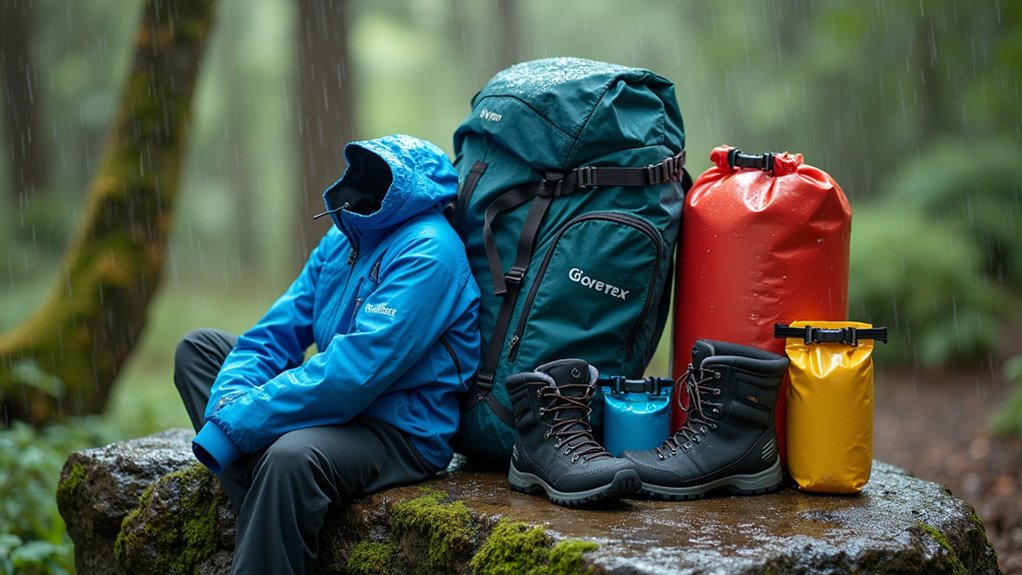
When you’re backpacking in unpredictable weather, staying dry is vital for comfort, safety, and maintaining your gear. To achieve this, you need to select specialized rain gear that offers both waterproof protection and breathability. Waterproof jackets, especially those made from materials like Gore-Tex, are engineered to block rain while allowing sweat to escape, reducing the risk of dampness from within.
Pair your jacket with rain pants, particularly in colder or consistently wet conditions; lightweight options such as Outdoor Research Helium Pants add minimal weight to your pack and provide full-leg protection. Rain gear helps block wind and retain body warmth, making it a crucial barrier against both wet and chilly conditions.
Lightweight rain pants, like Outdoor Research Helium, offer essential full-leg coverage without adding bulk—ideal for cold or persistently wet conditions.
Gaiters are also effective, fitting securely over your boots and lower legs to prevent water, mud, and debris from entering your footwear. Brands like Outdoor Research and Zpacks produce durable gaiters suitable for a variety of trail environments. For ultralight enthusiasts, rain kilts like the Zpacks DCF Rain Kilt offer knee-high coverage and improved ventilation compared to traditional pants.
Evaluating gear is essential before heading out, so take the time to test and adjust your rain protection system ahead of your trip.
Protecting your backpack and its contents is equally important. Use pack liners or rain covers to shield gear from leaks or heavy downpours, especially if your bag’s zippers aren’t fully sealed.
Layering remains fundamental when managing changing weather. Start with moisture-wicking base layers to pull sweat away from your body, add mid-layers such as fleece for insulation, and finish with waterproof outerwear.
Accessories including waterproof hats, gloves, and scarves add protection for extremities, and adjustable layers let you respond quickly to changes in temperature or exertion level. Understanding trail conditions beforehand can help you pack appropriate rain protection for your specific hike.
Footwear should feature waterproof membranes and quick-drying, breathable materials. High-top hiking boots paired with gaiters keep your feet dry in puddles and persistent rain. Always carry spare socks, as dry feet help prevent blisters and cold-related injuries.
Store electronics, maps, and clothing in dry bags or waterproof pockets inside your pack, and use ziplock bags for smaller items. Navigation tools, including waterproof GPS devices and map cases, maintain functionality in wet environments.
Finally, verify your first aid kit, emergency blanket, and headlamp are stowed in water-resistant containers to support safety if conditions become hazardous. This thorough approach keeps you dry, comfortable, and prepared for unpredictable rain on the trail.