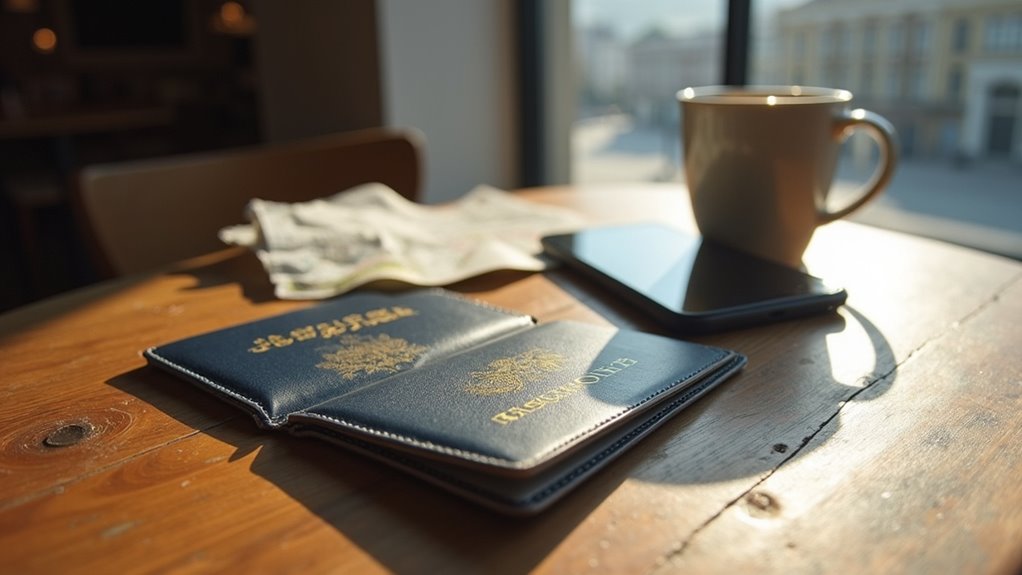
If you lose your passport abroad, promptly contact the nearest U.S. embassy or consulate to report it as lost or stolen and protect your identity. You’ll need to fill out Forms DS-64 and DS-11, show proof of citizenship and identity, and bring a valid passport photo. Emergency passports may be available for urgent travel, but full replacements are better for future use. Expedited services depend on your travel needs. More detailed steps and precautions can help guarantee a smooth recovery process.
If you lose your passport while traveling abroad, it’s crucial to act quickly and follow specific procedures to safeguard your identity and minimize travel disruptions. Your first step should be to contact the nearest U.S. embassy or consulate as soon as possible. The Consular Section will provide guidance and help you report your passport as lost or stolen. In some locations, you may also need to file a police report, especially if local authorities require official documentation of the loss.
Act quickly if you lose your passport abroad—contact the nearest U.S. embassy or consulate to protect your identity and travel plans.
To facilitate the replacement process, gather all necessary documents before you arrive at the embassy or consulate. You’ll need proof of U.S. citizenship, such as a birth certificate, and proof of identity, like a driver’s license. Obtain a passport photo in advance that meets U.S. Department of State requirements, since having it ready will save time. Proof of your travel plans is crucial if you need to expedite the process, particularly for imminent departures. Most U.S. embassies and consulates cannot issue passports on weekends or holidays, so plan your visit accordingly to avoid unnecessary delays. Reporting a passport lost or stolen results in immediate cancellation; once reported, it cannot be used for international travel under any circumstances.
Report the lost passport using the U.S. Department of State’s online form filler, and complete Form DS-64, which serves as your statement regarding the lost or stolen passport. Mail the completed DS-64 to the indicated address, as this is part of the official process.
Remember, reporting your passport lost or stolen doesn’t automatically start the replacement process, so you must also complete Form DS-11, the application for a new passport. Submit both forms in person at the embassy or consulate and wait to sign them until instructed. Bring all supporting documents, pay applicable fees, and ask about expedited or emergency passport options if your travel timeline is tight.
Emergency passports are usually valid for up to one year and suitable for immediate travel needs, but a full replacement passport is more convenient for future trips. Keep copies of crucial documents stored separately and consider digital backups for added security.
Once you receive your replacement passport, verify its validity dates and confirm it has the necessary entry visa, if required. Registering with the Smart Traveler Enrollment Program and reviewing U.S. re-entry requirements can further ensure smooth travel.