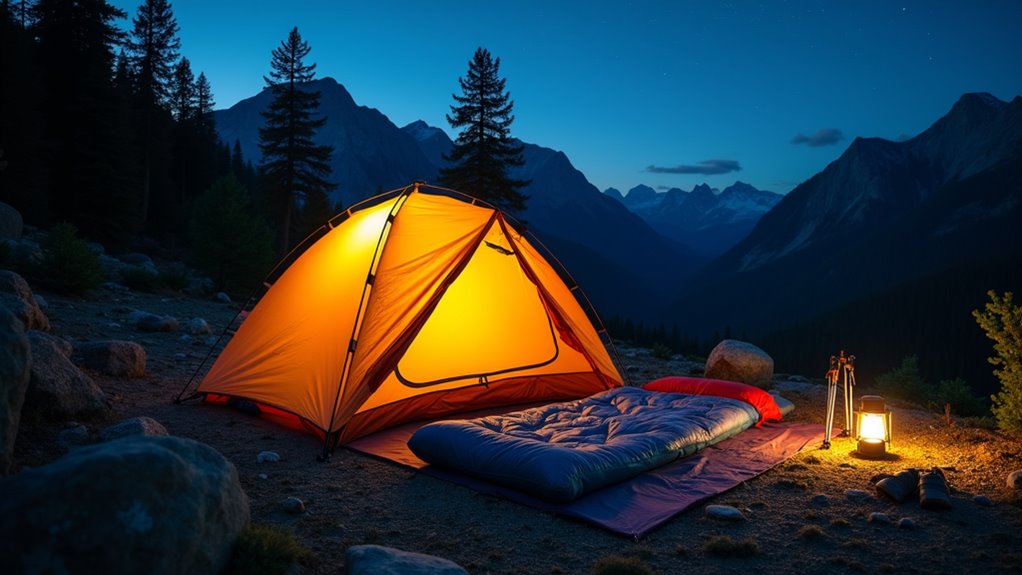

To sleep comfortably when camping outdoors, choose a flat, sheltered area free of roots or rocks, using a waterproof tent and a groundsheet for insulation and weather protection. Select a sleeping bag rated for the expected temperature and pair it with an insulating pad or mattress. Wear dry, moisture-wicking sleepwear; layer as needed, and use a hat or gaiter for added warmth. Maintain ventilation, limit water intake before bed, and settle in after a relaxing routine. More useful tips follow below.
Whether you’re camping in a remote backcountry site or setting up near your car in a designated campground, sleeping comfortably outdoors requires careful planning and the right equipment. Start by selecting a suitable camping spot—look for a level area with enough room for your tent and easy access for entry and exit. Avoid low-lying spots prone to water accumulation, as well as areas with exposed rocks or roots that could disrupt your sleep. Consider the ambient noise level and choose a location away from potential disturbances, using natural shade and wind protection if available. For an extra layer of comfort, sleeping pads provide insulation and cushioning to help protect you from the cold, hard ground.
Before setting up your tent, clear the ground of debris and verify it’s as level as possible. Use a sturdy, waterproof tent for protection against the elements, and add a groundsheet or extra floor insulation to reduce heat loss from the ground. Properly secure your tent to withstand wind and changing weather conditions, and maintain ventilation to manage condensation and internal temperature. A good tent should be easy to set up and enjoyable to be in, making the process less stressful and enhancing your overall camping experience.
For sleeping, choose a sleeping bag rated for the expected temperature range and pair it with an appropriate sleeping pad—self-inflating, foam, or air mattresses all offer varying levels of comfort and insulation. Bring extra blankets or foam pads if you anticipate cold conditions. A lightweight pillow, or even a makeshift one, will add comfort and support. Some campers prefer hammock systems for their ability to keep you elevated off the ground and provide a distinctive sleeping experience.
Wear clean, dry, and moisture-wicking sleepwear such as long underwear tops and bottoms, plus dry socks. Layer your clothing based on temperature changes, and include hats or neck gaiters to prevent heat loss. Stay hydrated throughout the day but limit water intake before bedtime to avoid nighttime interruptions. Eat a light snack before sleeping, as digestion helps maintain internal warmth.
Engage in light, non-strenuous exercise before bed to warm up, and consider a warm, non-alcoholic beverage to increase comfort. Manage ambient noise and brightness as needed, using earplugs or eye covers if necessary. Allow time to relax before sleep—avoid screens and heavy meals late in the evening.
Check weather forecasts and adjust your setup and clothing accordingly to maximize your comfort and guarantee a restful night outdoors.