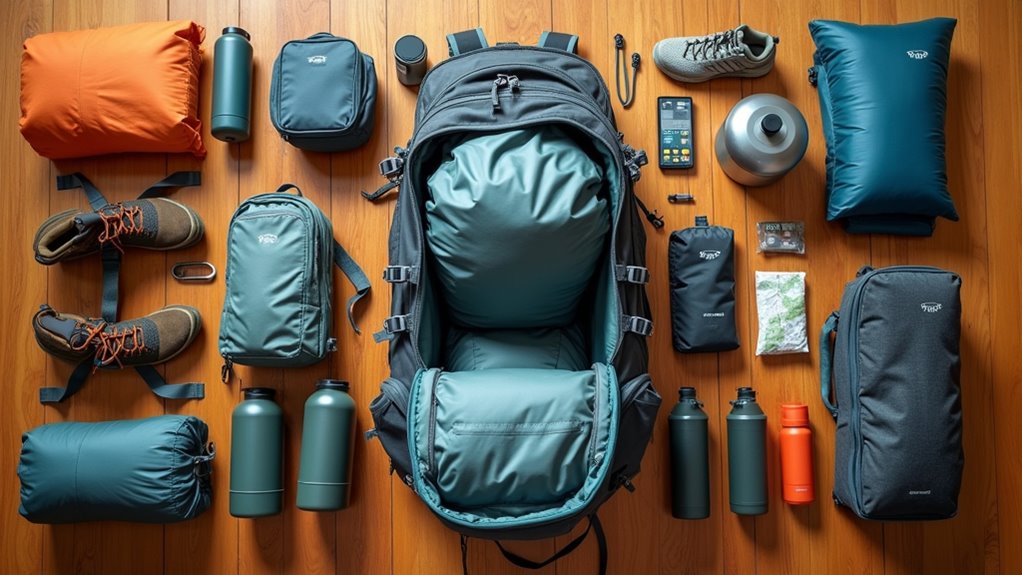

To build hiking endurance for longer backpacking trips, start by establishing a base with regular cardio workouts of 30 to 50 minutes, then progress to 75 minutes as your stamina grows. Include high-intensity interval training three to four times weekly, and add strength exercises for your core, legs, hips, and shoulders. Gradually increase pack weight and hike duration on varied, uneven terrain, aiming for four-hour sessions or longer. Prioritize recovery, nutrition, and hydration for ideal adaptation—further strategies follow.
If you’re preparing for a multi-day backpacking trip, developing robust hiking endurance is essential for tackling long distances over varied terrain while carrying a loaded pack. To start, focus on building a base level of stamina through low-intensity walks or runs, gradually increasing the duration of your workouts from 30 to 50 minutes, and eventually up to 75 minutes per session.
Schedule three to four high-intensity training sessions each week, targeting an exertion level of about 7 out of 10. This establishes a foundation that supports more advanced training as your conditioning improves. While cardio is critical, strength training helps prevent foot and knee injuries by fortifying the muscles and joints that endure the repetitive impact of hiking.
Aim for three to four weekly high-intensity workouts at a 7/10 effort to lay the groundwork for greater endurance gains.
Incorporate both cardiovascular and strength training exercises to maximize your hiking performance. Cardiovascular workouts, such as brisk walking, running, or stair climbing, should last up to 60 minutes and include interval training to push both aerobic and anaerobic capacity. Adding stair climbing to your routine is particularly effective at building endurance for uphill and varied trail conditions.
Mix steady-state efforts with intervals and incorporate uphill or incline work to simulate trail conditions and increase stamina. Gradually increase the intensity and length of these sessions as your fitness level advances.
Strength training is equally important for hiking endurance. Focus on exercises that strengthen your core, legs, hips, shoulders, and feet, as these areas bear the brunt of hiking with a backpack. Emphasize your posterior chain—hamstrings, glutes, and lower back—to enhance power and stability.
Include functional movements and balance exercises like single-leg deadlifts, and progressively add resistance over time. Aim for two to three strength training sessions per week, combining them with your cardio routine.
Progress to longer hikes by scheduling outings that last four hours or more, carrying a backpack weighted to match your expected load. These hikes should include varied terrain, such as steep or uneven trails, to prepare your body for realistic conditions.
Gradually increase distance and pack weight to build sustainable stamina while minimizing injury risk. Creating a structured training plan with specific weekly goals will help you stay consistent and track your progress effectively.
Prioritize recovery by scheduling regular rest days and using active recovery methods, such as stretching or gentle walking. Maintain hydration and consume balanced meals rich in carbohydrates, proteins, and fats to fuel your workouts and hiking days.
Pay attention to signs of fatigue or injury, and guarantee you get adequate sleep to support your body’s adaptation to endurance training.