To safely and efficiently store food while backpacking, use a hard-sided bear canister—like a BearVault or Bearikade—in areas where bears are active, as many parks require them for storing up to a week’s supplies. Ursack critter bags, combined with odor-proof liners, help deter rodents but may not meet all regulations. If permitted, hang food 12-15 feet above ground using a 50-foot cord, and always use bear boxes if provided. Proper storage techniques will also help you stay organized and avoid wildlife encounters; the next steps offer additional details.
When you’re backpacking in the backcountry, storing food properly is critical for both your safety and the protection of wildlife. In areas known for bear activity, you should rely on hard-sided bear canisters like the BearVault or Bearikade, which are widely recognized for their effectiveness. The BearVault 500 is suitable for extended trips, while the BV450 works well for shorter hikes. Bearikade models offer a lighter option but come at a higher cost. Many parks, including Denali and the John Muir Trail, require approved canisters to prevent wildlife from accessing human food. With efficient packing, you can store five to eight days’ worth of food in these containers.
If you’re traveling outside strict bear country, Ursack critter bags provide a lightweight alternative, holding up to 10.5 liters, enough for most multi-day hikes. However, Ursacks need to be paired with odor-proof liners to deter rodents, and you must secure them properly to trees or under large rocks. Keep in mind that Ursacks aren’t universally accepted as bear-proof, so always check specific area regulations before relying on them. In critter-prone environments, packing food in rodent-resistant bags is important even when bears are absent, as small mammals and birds can still damage food supplies. Using scented items like deodorant and toothpaste can also attract animals, so these should be stored with your food or in appropriate containers away from your sleeping area.
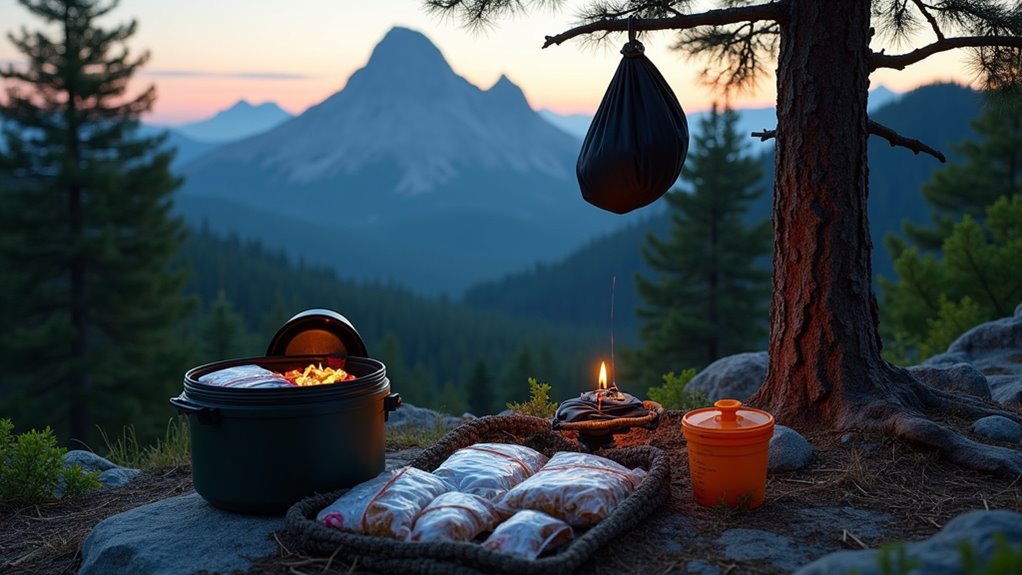
Hanging food using a cord system is another option, especially where canisters aren’t mandatory. For this method, you’ll need at least 50 feet of cord, a waterproof food bag, and a rock bag for throwing the line. The Pacific Crest Trail (PCT) method and counterbalance technique are commonly used, but remember to hang your food at least 12-15 feet above ground and 200 feet from your campsite. In areas with habituated wildlife or crowded shelters, hanging may not be effective.
Take advantage of preinstalled infrastructure like bear boxes or cables whenever they’re available—these are common along high-use trails such as the Appalachian Trail. Always clean these thoroughly after use.
To minimize scent trails, repackage meals in odor-proof or vacuum-sealed bags, avoid strong-smelling foods in bear habitats, and use separate bags for trash. Never store food in your tent or backpack overnight. Organize your food by meal and keep frequently used items accessible.
Finally, always review local rules, as requirements differ between regions like Yosemite, the Sierra Nevada, and coastal or desert environments.