To poop outdoors safely and responsibly, select a site at least 60 meters from water, dig a cat hole at least 15 centimeters deep, and avoid high-traffic or erosion-prone areas to protect the environment. Cover your waste thoroughly, pack out used toilet paper if required, and use hand sanitizer or soap and water for hygiene. Always follow local regulations, as improper disposal can harm both health and ecosystems. Additional details about waste management options and group practices are available below.
When you need to relieve yourself outdoors, it’s essential to do so in a way that protects both your health and the environment. Start by choosing a location at least 60 meters (200 feet) from any water source, such as a river or lake, to minimize the risk of contaminating drinking water.
Select a spot that’s downwind and away from campsites or trails to reduce odor and avoid exposing others to waste. Examine the soil—choose ground that’s soft enough to dig but not prone to flooding or erosion, and steer clear of high-traffic areas or protected habitats to prevent disturbing wildlife or sensitive ecosystems.
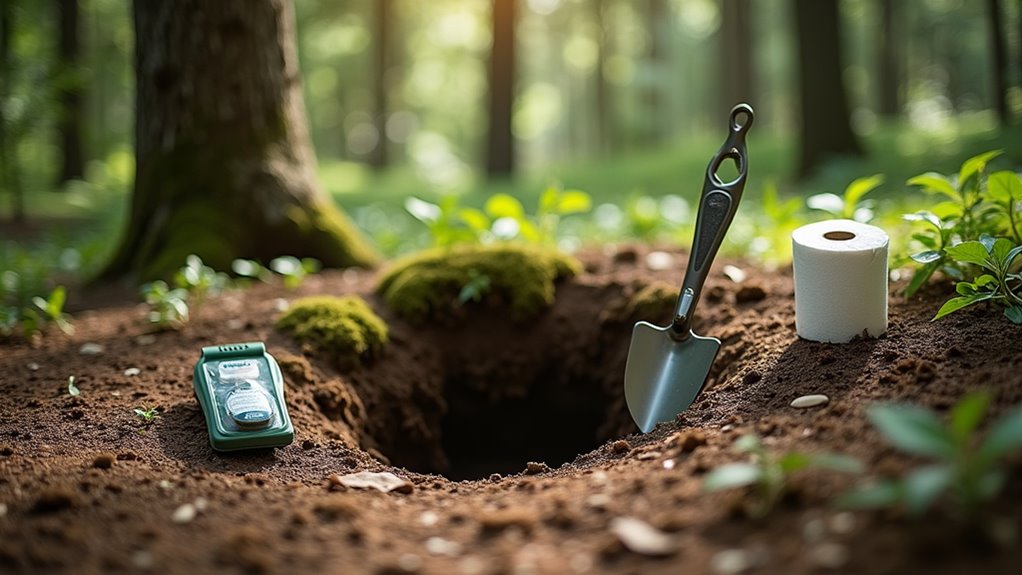
Before you go, make sure you can dig a hole at least 15 to 20 centimeters deep and about 15 centimeters wide. This depth helps secure waste, discouraging animals from digging it up and limiting the spread of pathogens. Use a small shovel or trowel, and in group settings, consider digging multiple smaller holes rather than a single large one to reduce environmental impact. Open defecation can cause fecal contamination of the environment, leading to the spread of diseases such as diarrhea, cholera, and typhoid. In many regions, unsafe child feces disposal remains a significant public health challenge, contributing to the transmission of enteric infections in both children and adults.
Dig a hole 15–20 cm deep and 15 cm wide to safely contain waste and minimize environmental impact when outdoors.
After use, always cover the hole completely with the excavated soil and tamp it down to minimize odor and deter flies. Carry water or hand sanitizer to clean your hands thoroughly after defecation, as this greatly reduces the risk of pathogen transmission. Whenever possible, wash with soap and water.
Avoid direct contact with feces and the soil from the cat hole. Use toilet paper sparingly, and if local regulations or environmental guidelines prohibit burying it, pack out used paper in sealed bags. Consider biodegradable toilet bags for a self-sanitizing, containment solution.
If you’re staying longer or camping with a group, bucket toilets or urine-diverting dry toilets can offer better waste management. For highly sensitive or frequently used areas, portable toilets are preferable, and open defecation should be strictly avoided.
Always comply with local laws and park regulations, since improper disposal can spread disease, damage ecosystems, and result in fines. Responsible practices guarantee safe sanitation, protect natural resources, and support the health of all who share the outdoors.