Freeze-dried foods are an excellent option for backpacking, staying safe to eat and retaining quality for 25 to 30 years if you store them in airtight containers away from heat, moisture, and sunlight. They don’t require refrigeration, and you’ll get nearly all their original nutrients as long as they’re sealed properly. With lightweight packaging and fast rehydration, they’re practical for both short and extended trips. If you want to guarantee maximum freshness, there are specific storage tips worth knowing next.
How long can you really depend on freeze-dried foods to stay safe and nutritious in storage? If you’re planning a backpacking trip and want reliable meals, freeze-dried foods are among your best options for long-term storage and portability. The shelf life of freeze-dried foods typically ranges from 25 to 30 years when stored under ideal conditions, surpassing dehydrated foods, which usually last only 1 to 3 years. The main reasons for this longevity are the extensive moisture removal during freeze-drying and the effectiveness of modern packaging. In addition, freeze-dried food stores for 25+ years without losing quality or nutritional value, making it a superior choice for extended trips and emergency reserves. You’ll find that brands like Mountain House claim up to 30 years of shelf life, provided you keep the pouches or cans in cool, dry, and dark environments.
Your storage practices have a direct impact on how long these foods remain edible and nutritious. It’s essential to use airtight containers, vacuum-sealed bags, or tightly sealed mason jars to prevent exposure to moisture and air, both of which can drastically reduce shelf life. Locations such as basements or interior rooms without direct sunlight are ideal for storing your food cache, as lower temperatures and humidity levels further extend usability. Freeze-dried foods do not require refrigeration and can be stored at room temperature, making them practical for both home storage and extended trips. If you have sensitive ingredients or want to maximize preservation, freezer storage is another effective option.
While freeze-dried foods retain most of their nutritional value, some vitamins, particularly C and B, will inevitably degrade over time. However, compared to dehydration, freeze-drying does a better job of locking in nutrients and flavors. Textural changes may occur, especially after long storage, but proper rehydration—usually just adding boiling water—restores taste reasonably well.
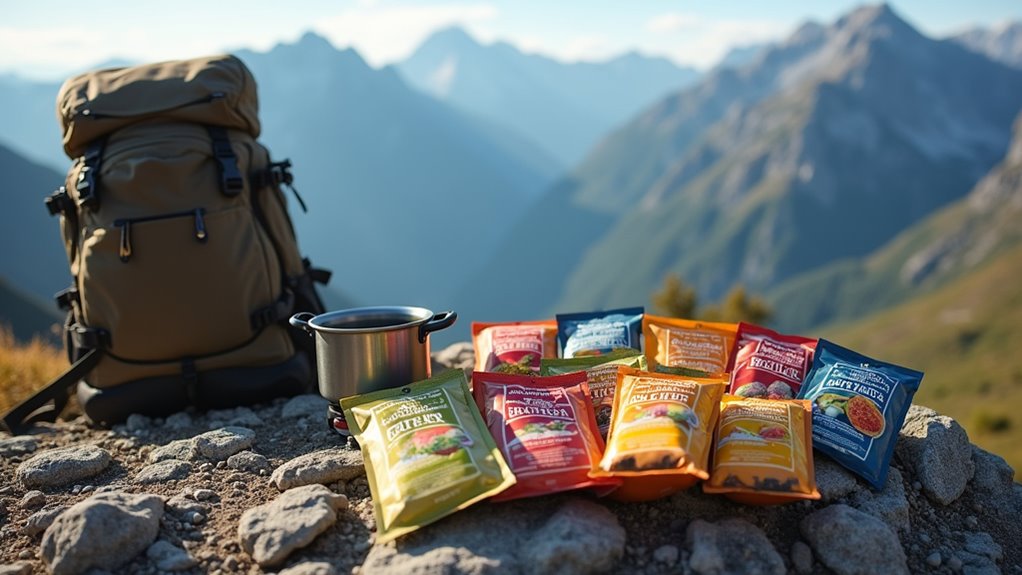
Freeze-dried meals are lightweight, compact, and rehydrate faster than dehydrated options, making them ideal for backpacking where every ounce and minute counts. Handling and preparation are straightforward, but portion control is important to prevent waste and maintain convenience.
To conclude, freeze-dried foods, when stored correctly, offer decades of dependable shelf life, superior nutrition retention, and practical advantages for backpackers needing lightweight, long-lasting, and easy-to-prepare meals.