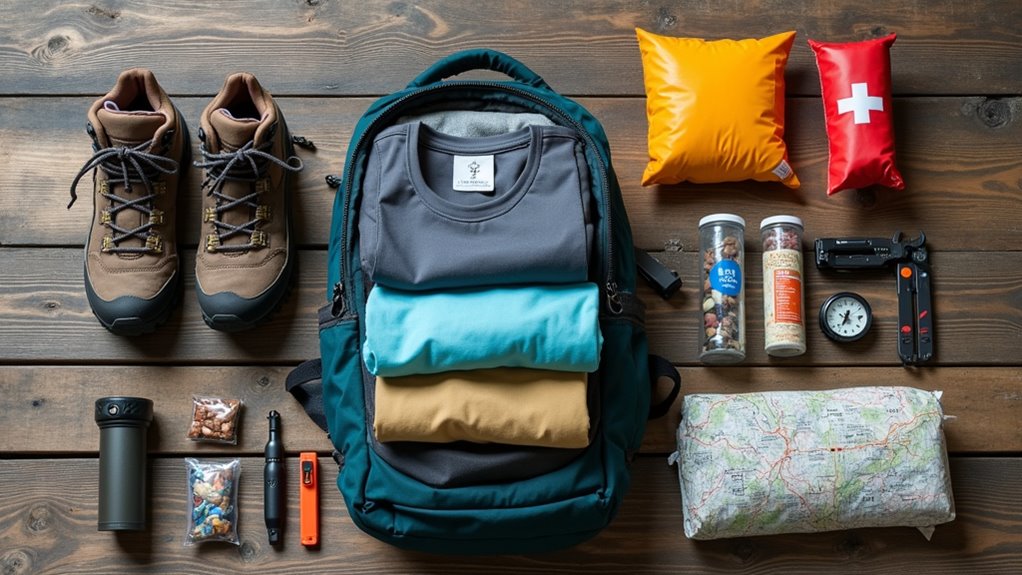
A backpacker should pack a well-fitted backpack containing shelter such as a lightweight tent, a reliable sleep system, water bottles or hydration bladders with purification tablets or filters, and a compact stove or cookware for meal preparation. Clothing layers must accommodate varying conditions, including insulating midlayers and durable footwear. Navigation tools like maps and compasses, a headlamp with extra batteries, and basic emergency supplies such as a whistle and bivvy are essential. Sound preparation improves safety and comfort on the trail, as further details demonstrate.
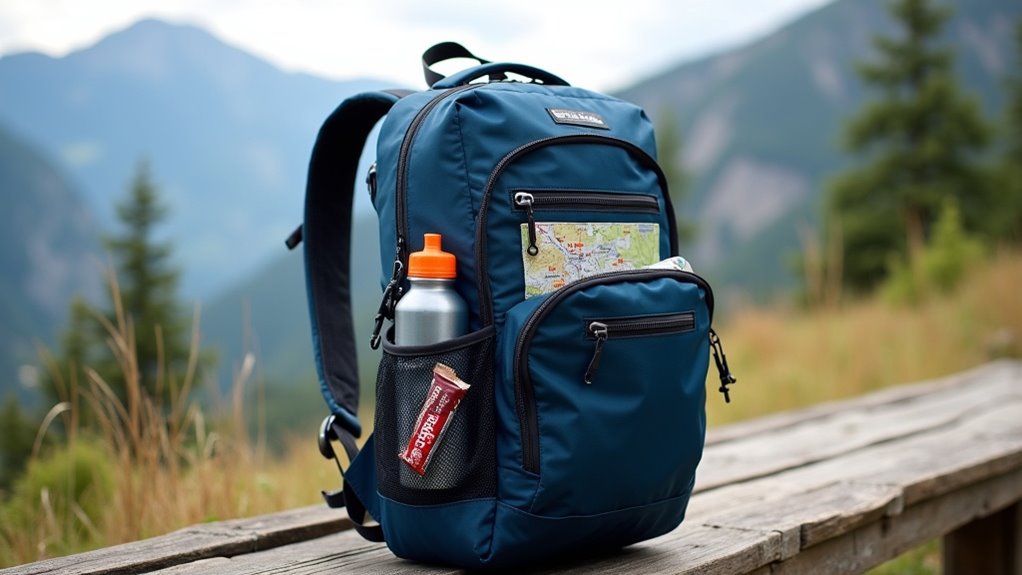
When preparing for a backpacking trip, careful consideration of gear selection is crucial to guarantee safety, comfort, and self-sufficiency in remote locations. The foundation of any packing list begins with three primary gear categories: the backpack, shelter, and sleep system. A well-fitted backpack serves as the central container for all equipment, balancing capacity with weight to minimize strain during extended treks.
Thoughtful gear selection—starting with backpack, shelter, and sleep system—is essential for safety, comfort, and self-sufficiency when backpacking.
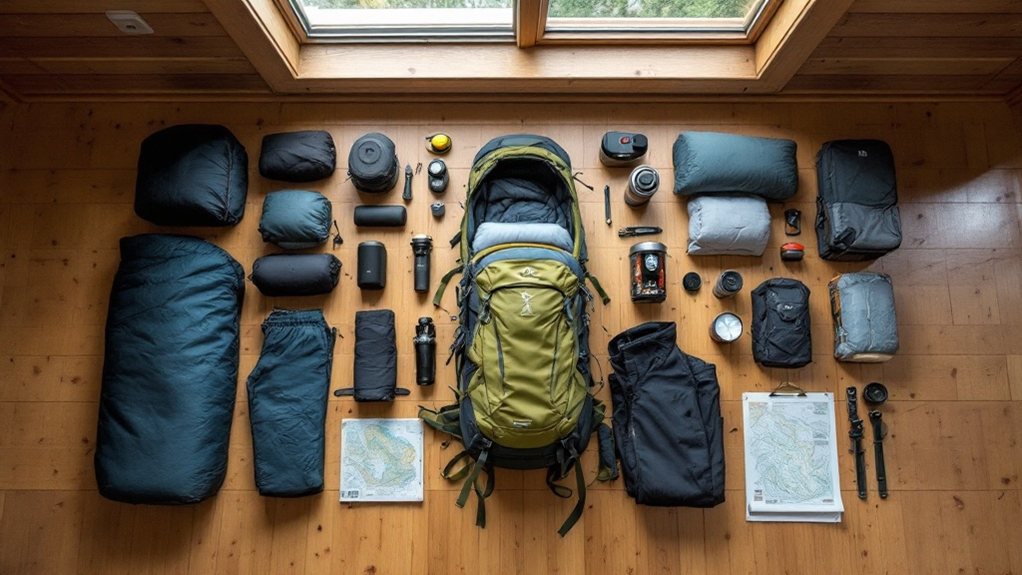
Shelter, typically a lightweight tent combined with important camping gear, enables secure overnight stays, while a sleep system—consisting of a sleeping bag, pad, and compact pillow—guarantees adequate rest and insulation from the elements. A handy checklist for packing helps ensure you don’t forget essential items, making it particularly useful for first-time overnight trips.
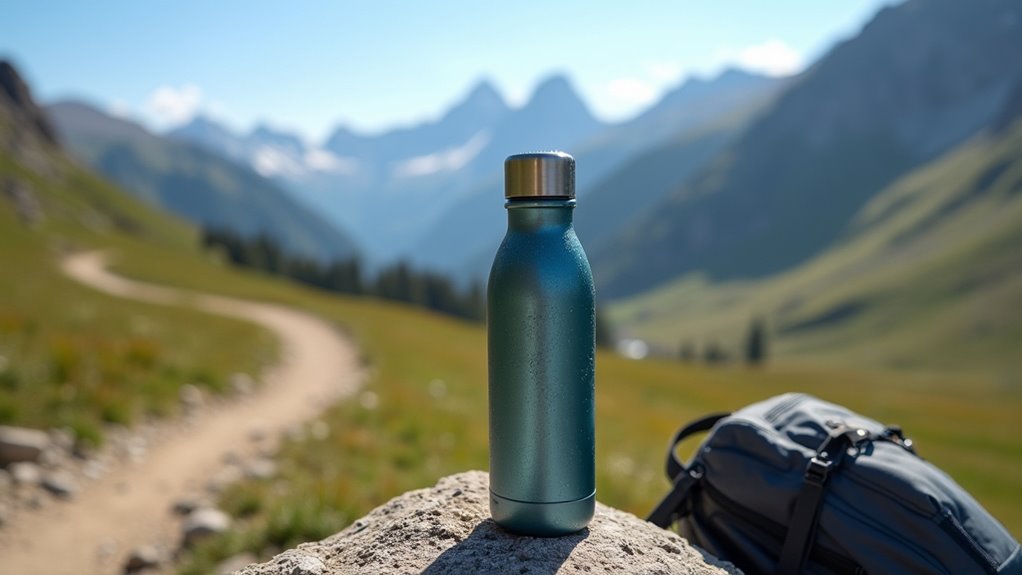
Water storage and treatment supplies are non-negotiable for hydration, especially when access to potable water is uncertain. Options include sturdy water bottles, hydration bladders for efficient sipping on the move, and portable water purification tablets or filters to neutralize contaminants. For personal hygiene on the trail, items such as a portable bidet attachment or antimicrobial pee cloth can significantly reduce waste and improve cleanliness.
Cooking needs are addressed with a compact stove, fuel, and minimal cookware, allowing for efficient meal preparation and reducing dependence on open flames, which may be restricted in certain regions.
Proper clothing and footwear selections directly impact comfort and safety. Durable hiking boots or shoes provide necessary support and protection over rough terrain, paired with moisture-wicking socks and multiple underwear options for hygiene.
Layering is critical: base layers for warmth, insulating midlayers such as fleece, and outerwear including rain gear and a warm hat accommodate fluctuating temperatures and precipitation. Further clothing like long-sleeve shirts, versatile shorts or pants, and sun protection gear—such as sunglasses, hats, and sunscreen—address environmental hazards like intense sunlight and biting insects. Versatile clothing options that can be mixed and matched will help you pack efficiently while maintaining comfort in various conditions.
Personal hygiene and first aid supplies, including a toothbrush, biodegradable soap, moisturizer, hand sanitizer, and a thorough first aid kit, support health in isolated settings.
Navigation and safety items, such as a detailed map, compass, optional GPS device, emergency bivvy, and whistle, guarantee preparedness for disorientation or emergencies.
Electronics and lighting, including a headlamp with extra batteries, portable power bank, camera, and smartphone, enable communication and documentation.
Ultimately, food storage in bear-resistant containers or odor-proof bags, combined with energy-dense snacks, completes the list, supporting sustenance and minimizing wildlife encounters.