
To hang your food while camping and keep wildlife away, use a sturdy nylon sack or Ursack and at least 75 feet of rope, securing it 10 feet above the ground and 4 feet out from any tree trunk. Familiarize yourself with reliable hanging methods like the Pacific Crest Trail (PCT) technique or consider bear canisters if trees are scarce. Always check local park regulations, and secure bags tightly to withstand weather and curious animals. Below, you’ll discover best practices and alternative methods.
When you’re camping in areas where wildlife is present, properly hanging your food is vital for both your safety and the protection of local animals. To start, gather the necessary gear: a sturdy nylon stuff sack or Ursack, a rope that’s at least 75 feet long and ¼ inch thick, and two carabiners for securing and lifting the bag. Make sure you also carry a mini carabiner and a stick or pole for retrieving your food bag later. Before your trip, study the local park regulations since some areas have specific requirements for food storage and hanging techniques.
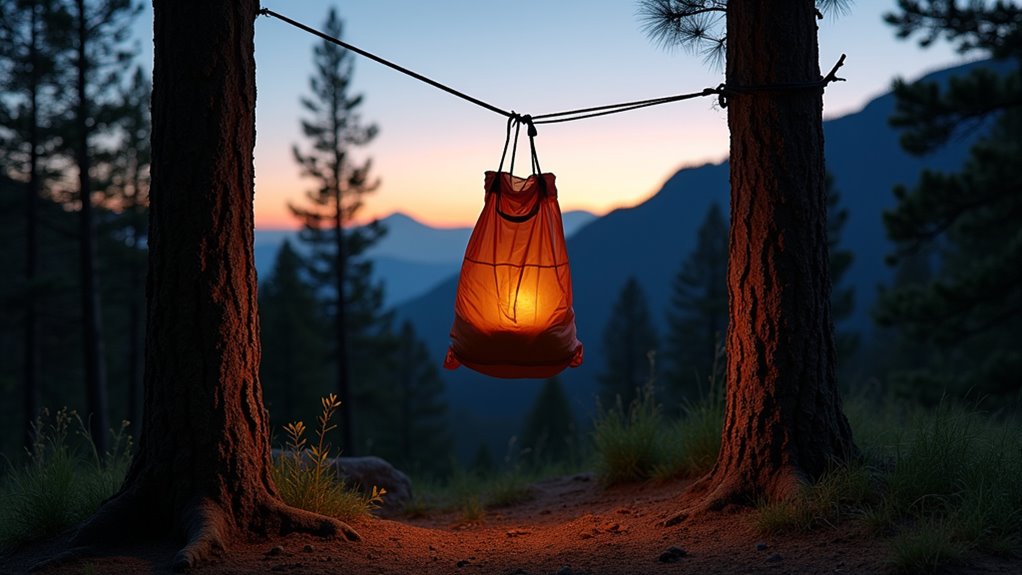
Choosing suitable trees is an important step. You’ll want to select trees with strong, healthy branches at least 10 feet off the ground and 4 feet out from the trunk. This placement makes it difficult for bears and other wildlife to reach your food. Set up your sleeping area at least 300 feet away from your kitchen and food storage to help minimize odors and avoid attracting bears. In forest environments, these branches are often plentiful, but in mountainous terrain, you may need to search for branches that extend farther out to prevent animals from climbing directly up to your bag. If you’re camping near water, always hang your food away from the shoreline to avoid attracting wildlife to sensitive habitats. Bear canisters are also an alternative to hanging food, especially in areas where trees suitable for hanging are scarce or local regulations require their use.
Look for sturdy branches at least 10 feet high and 4 feet from the trunk to keep your food safe from wildlife.
Familiarize yourself with different hanging methods, such as the PCT method and the clothsline method, as campsite conditions can vary. The PCT method uses a single rope tossed over a high branch and is secured with a carabiner, making it ideal for lightweight bags up to 20 liters. For heavier loads, like a 60-pound pack, the clothsline method works well by stringing a line between two trees and optionally adding a pulley for easier lifting. This method is also useful when multiple food bags need to be suspended.
Always secure your bag tightly to withstand wind and weather, and inspect the stability of your chosen trees. Using gloves can help protect your hands while handling ropes. By following these steps, you greatly reduce the risk of wildlife encounters and help preserve natural behaviors in local animal populations.