To wash clothes while traveling as a backpacker, use a portable wash bag or a large resealable plastic bag with biodegradable soap and lukewarm water, agitate for a few minutes, then rinse thoroughly. Wring out the excess water, hang clothes on a lightweight cord using safety pins, and let them dry in sunlight or using body heat if needed. Always dispose of gray water away from natural sources and avoid harsh chemicals. More practical strategies and tips follow.
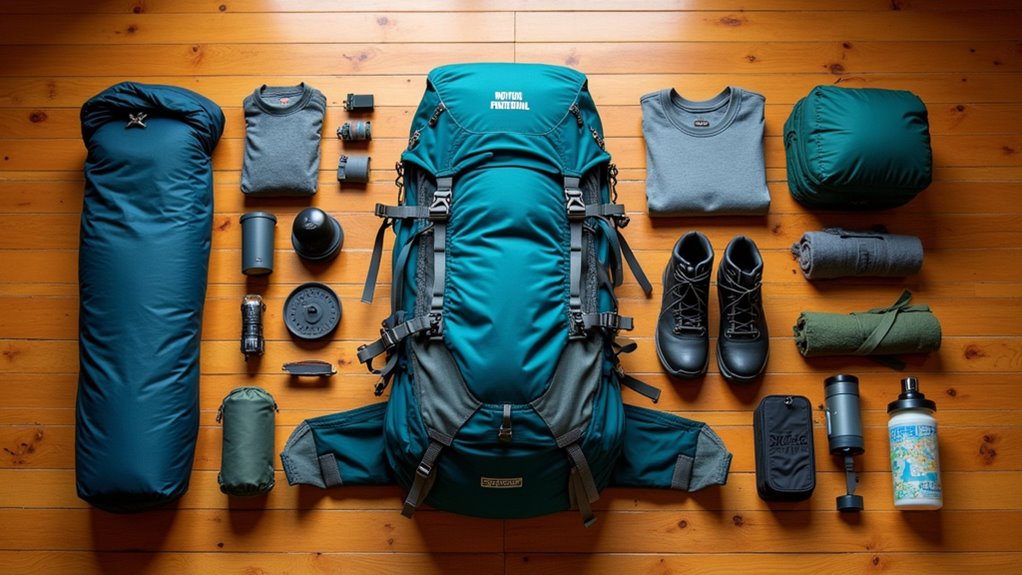
Whether you’re backpacking through remote regions or staying in urban hostels, knowing how to wash clothes while traveling is essential for maintaining hygiene and extending the lifespan of your wardrobe. Carrying a few essential supplies makes the process straightforward and environmentally responsible. Always pack biodegradable soap to minimize your impact, and choose lightweight, portable washing bags like the Scrubba Wash Bag or an Ultra-Sil Kitchen Sink, which are efficient and easy to use.
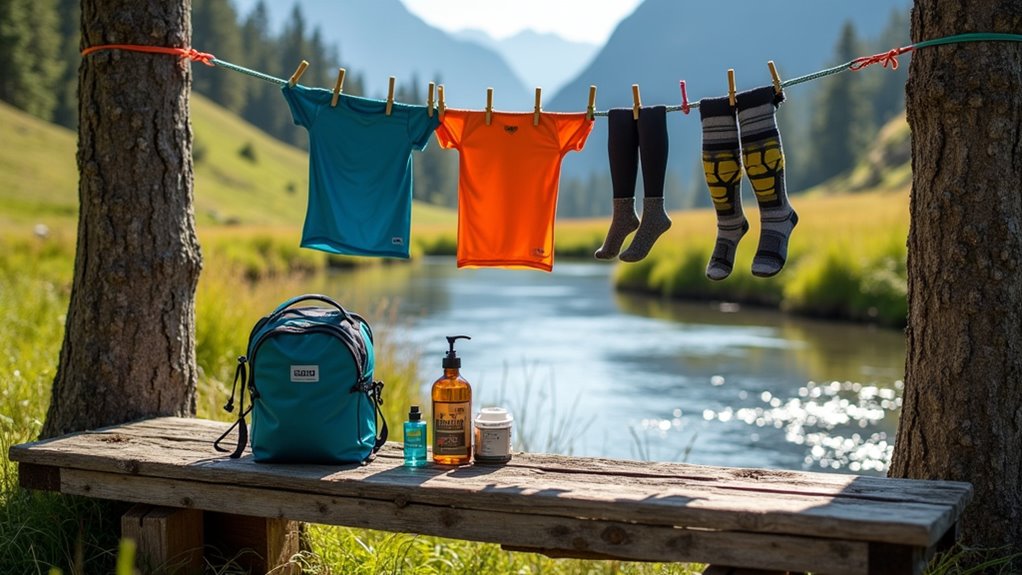
Bring a small coil of lightweight cord and several safety pins for makeshift clotheslines, along with a sturdy water container or access to buckets for washing. Washing clothes in surface water is prohibited in many protected areas, so be sure to only wash and dispose of gray water at least 200 feet away from natural water sources to help preserve local ecosystems. If you’re staying in a city, you can also take advantage of coin-operated laundromats which are commonly available in urban areas and offer a convenient way to clean larger loads.
To wash your clothes, you can use hand washing in a sink or basin, ideally with lukewarm water and travel-sized soap. If a sink isn’t available, a two-gallon, freezer-grade re-sealable plastic bag can serve as a makeshift washing machine—just add water, soap, and your clothes, seal, and shake vigorously to mimic a spin cycle.
No sink? Use a sturdy plastic bag—add water, soap, clothes, then seal and shake for a portable wash anywhere.
Always soak clothes for several minutes to loosen dirt, and use friction by rubbing fabrics together to remove grime. For stains, address them immediately with cold water and a travel-sized stain remover, gently rubbing the affected area before washing as usual.
After washing, wring excess water from your clothes to speed up drying and then hang them on your line, using safety pins and cord, or lay them in direct sunlight for solar drying. If conditions require, you can wear damp clothes to use body heat for drying.
Pack quick-drying synthetic fabrics to make this process faster and more efficient. Be mindful of your environmental impact—always dispose of used water at least 200 feet from natural water sources, use camp sumps when available, and avoid fabric conditioners or bleach.
Maintain personal hygiene by washing clothes frequently, rotating underwear, showering when possible, and washing your hands after handling laundry. Regularly managing stains and using travel-sized products will keep your load light and your wardrobe clean, while protecting the environments you visit.