To prepare for a hike, first pick a trail suited to your fitness and experience, considering distance, elevation, and local regulations. Check the forecast and pack weather-appropriate layers, sturdy boots, and a waterproof jacket. Carry essential safety gear: a first aid kit, map, compass, headlamp, and enough water and food. Don’t forget sun protection, insect repellent, navigation tools, and leave your trip plan with someone you trust. For detailed planning, you’ll find further key steps explained next.
Starting on a hike requires careful preparation to guarantee both safety and enjoyment, regardless of your experience level or the trail’s difficulty. You need to start by choosing a trail that matches your skill level and physical condition, taking into account elevation gain, trail length, and potential hazards.
Always check the weather forecast before heading out, as changing conditions can alter trail safety and comfort. Make sure you obtain all necessary permits and familiarize yourself with local regulations, since many protected areas have specific rules about group sizes, trail use, and conservation.
Check the weather and secure permits before your hike—changing conditions and local rules can greatly impact your safety and experience.
Plan your hike’s timing to maximize daylight hours and avoid hiking in poor weather or darkness, which can increase risks. A hiking checklist serves as a strategic plan for outdoor adventures, helping you remember essential safety gear, navigation tools, and comfort items while avoiding overpacking.
Proper clothing is essential for comfort and protection. Wear sturdy hiking boots or shoes that provide good traction and ankle support. Use moisture-wicking socks to prevent blisters, and dress in lightweight, breathable base layers to accommodate temperature changes.
Pack insulating layers such as fleeces or sweaters for colder conditions, and bring a waterproof jacket or poncho to prepare for unexpected rain. Following Leave No Trace principles is crucial to minimize your environmental impact while enjoying nature’s beauty.
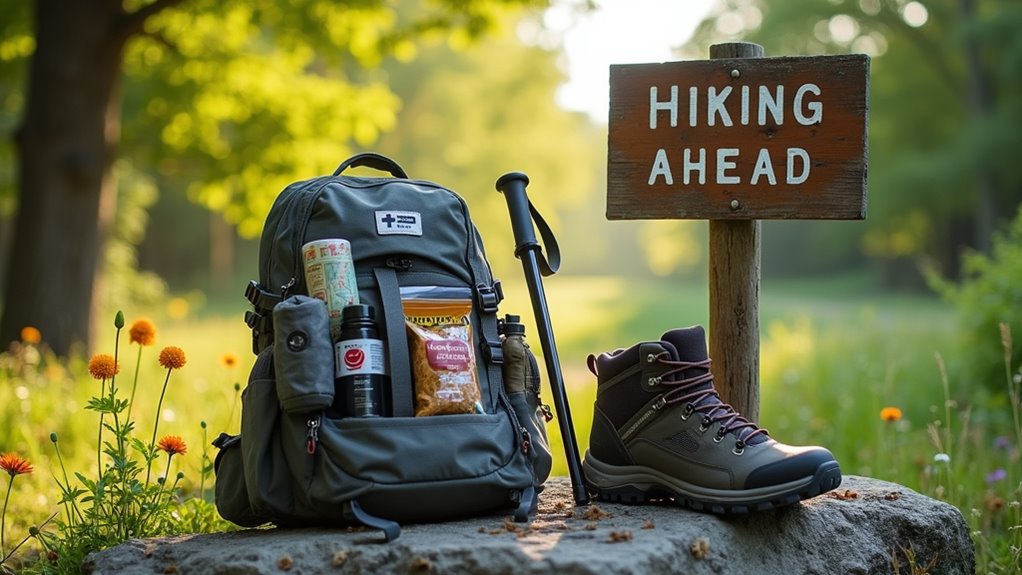
Carrying reliable safety equipment is non-negotiable. Bring a well-stocked first aid kit, an emergency whistle, and a headlamp or flashlight with extra batteries. If you or someone in your group has specific medical needs, customize your first aid kit to include items like an EpiPen or additional medications.
Fire starters like matches or a lighter, and a multi-tool with different functions, should be part of your kit. For navigation, carry a detailed map, compass, GPS device, and a trail guide. If you’re venturing into remote areas, a satellite messenger provides a critical safety net.
Hydration and nutrition must be planned. Carry enough water using bottles or a hydration bladder, and bring a water treatment system in case you need to refill from natural sources.
High-energy snacks such as trail mix and substantial meals are necessary for longer hikes, along with electrolyte supplements to maintain hydration.
Prepare for emergencies by learning basic first aid, leaving your route and emergency contact information with someone, and packing extra clothing and shelter.
Sun protection, insect repellent, trekking poles, and guidebooks for identifying plants and wildlife add important layers of safety and enrichment to your hike.