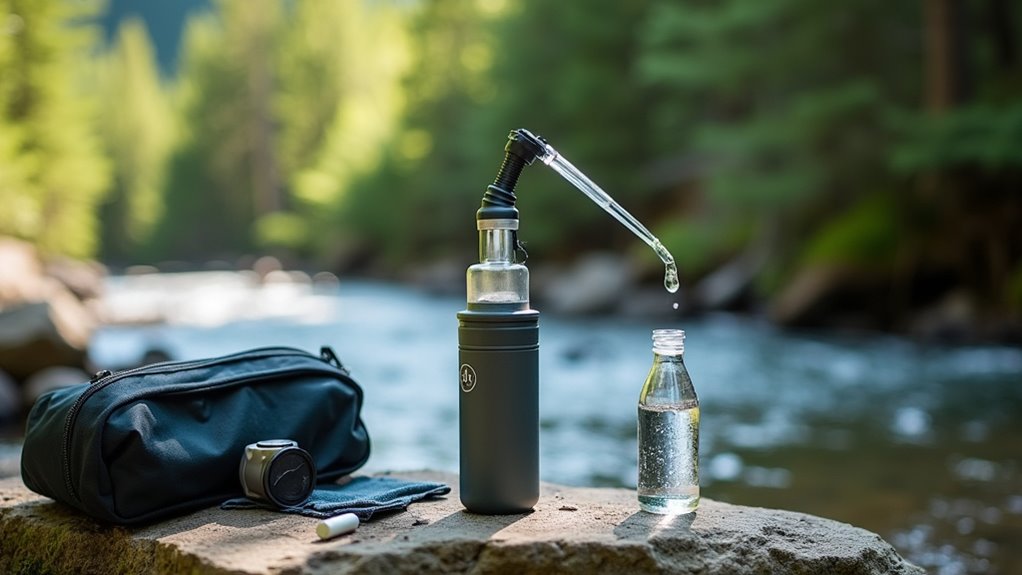

To clean your backpacking water filter, first backflush it using the provided syringe or hose with distilled water, which helps remove trapped debris and maintain flow rate. For ceramic filters, you can sanitize them by boiling, while most other types benefit from a soak in chlorine-based solutions before rinsing thoroughly. Let the filter dry completely, then store it in a ventilated space or sealed container. Follow your manufacturer’s instructions carefully to guarantee performance and warranty coverage—proper technique makes a big difference on your next trip.
Keeping your backpacking water filter clean is essential for guaranteeing safe hydration on the trail and maintaining the filter’s flow rate and longevity. You’ll encounter several filter types—hollow fiber, ceramic, pump, gravity, and squeeze filters—each needing specific cleaning techniques based on their materials and design. For example, hollow fiber filters, common in Sawyer or MSR models, require gentle handling to avoid damaging membranes, while ceramic filters like MSR’s MiniWorks can be sanitized by boiling.
Before you start cleaning, assess your filter’s condition to determine if it’s clogged or just needs routine maintenance. Always review the manufacturer’s instructions, since using the wrong method could void warranties or damage the filter. Cleaning and sanitizing backcountry water filters before winter storage helps to prevent microorganism growth and preserve filter performance over time.
Gather the necessary cleaning tools, such as hoses or syringes provided with your filter. Use distilled water for cleaning and backflushing because it prevents mineral buildup inside the filter element. Many filters, especially hollow fiber models, benefit from backflushing—reversing water flow through the filter using moderate pressure. Don’t use excessive force when backflushing, as high pressure can damage delicate filter media. Run water through dry filters before you backflush to reduce stress on the element, and perform several backflush cycles for thorough debris removal.
For sanitizing, ceramic filters can be boiled, while most others can be treated with chlorine-based solutions or Aquamira to kill bacteria and prevent biofilm growth during storage. Soak the filter in the solution for several hours, then flush thoroughly with distilled water before drying.
Drying is critical; remove as much moisture as possible, then store your filter in a well-ventilated area or a sealed container, depending on manufacturer recommendations. Regular sanitizing and drying prevent microbial growth during storage, especially for long-term periods.
Before each trip, inspect and backflush your filter to guarantee it’s functioning properly. Regular maintenance, including backflushing and using distilled water, keeps flow rates high and prolongs service life. Avoid exposing your filter to direct sunlight, as UV rays can degrade materials.
Always follow manufacturer guidelines to maintain performance and warranty coverage.