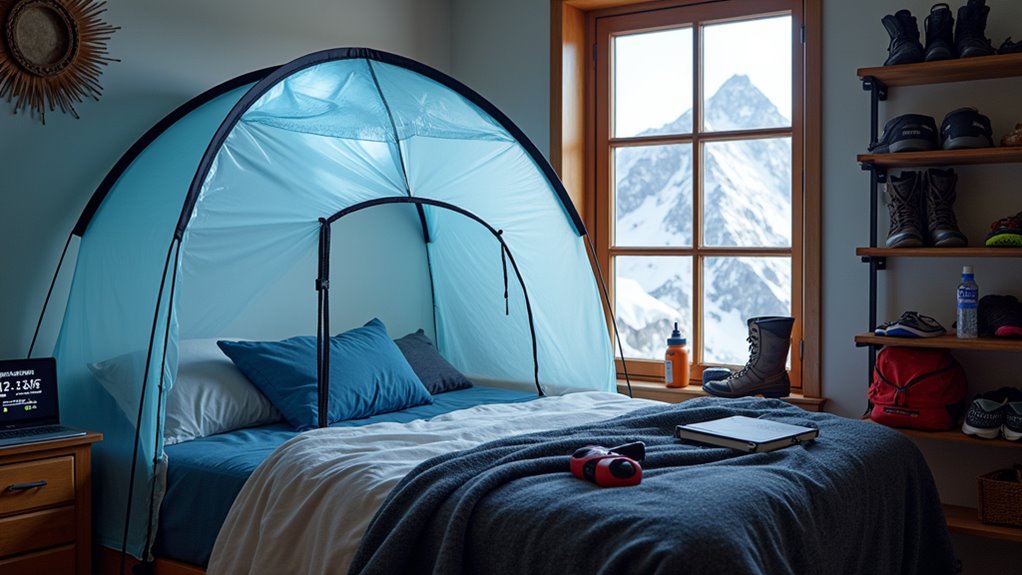
To acclimate to high altitude at home safely, you can use a hypoxic generator, altitude simulation tent, or mask system to mimic elevation, gradually increasing exposure over one to three days for each altitude increment. Aim for slow progression and monitor your health with a pulse oximeter and symptom checklists, ensuring you stay hydrated and eat a high-carbohydrate diet. Avoid rapid changes and limit intense exercise at first to reduce illness risk. Further steps and techniques can enhance your preparation.
When you travel to high altitudes, your body faces lower oxygen levels and thinner air, which can greatly affect how you feel and perform. To safely acclimate at home before your trip, you need to understand how your body adapts to these conditions and utilize reliable simulation methods. High altitude acclimatization is your body’s process of adjusting to reduced oxygen availability, and even though the percentage of oxygen remains the same, the decreased air density means you’ll get less oxygen with each breath.
To prepare, you can use hypoxic generators, tent-based altitude simulation systems, or mask-based devices that create a low-oxygen environment. These specialized setups allow you to mimic the conditions you’ll encounter at elevations above 8,000 feet. Intermittent hypoxic exposure (IHE) involves spending short, regular periods in these simulated environments, gradually prompting your body to adapt. Acclimatization typically takes 1-3 days at a given altitude, so be patient and give your body enough time to adjust between simulated increases. Gradual ascent is recommended to give the body time to adapt, and limiting your simulated increase to safe levels each day lowers your risk of altitude sickness.
Hypoxic training, which means exercising while exposed to reduced oxygen, may help improve performance, though research on its effectiveness is mixed.
As you simulate high altitude at home, your body starts to increase red blood cell production, boosting oxygen transport to your tissues. For effective acclimatization, aim to follow guidelines similar to those for real-world ascents: don’t increase the simulated altitude by more than 1,600 feet per day, and build in extra rest days every 3,300 feet of simulated gain. Proper rest and sleep are crucial for your body to adjust, while minimizing exercise during the initial days prevents overexertion.
Nutritional strategies are essential. Focus on a high-carbohydrate diet to support energy needs, maintain hydration by drinking plenty of water, and monitor your electrolyte balance. Limit caffeine and alcohol, since both can worsen dehydration and complicate recovery.
Monitor your health carefully using tools like the Lake Louise Scorecard to assess symptoms such as headaches, nausea, or fatigue, and use a pulse oximeter to track oxygen saturation levels.