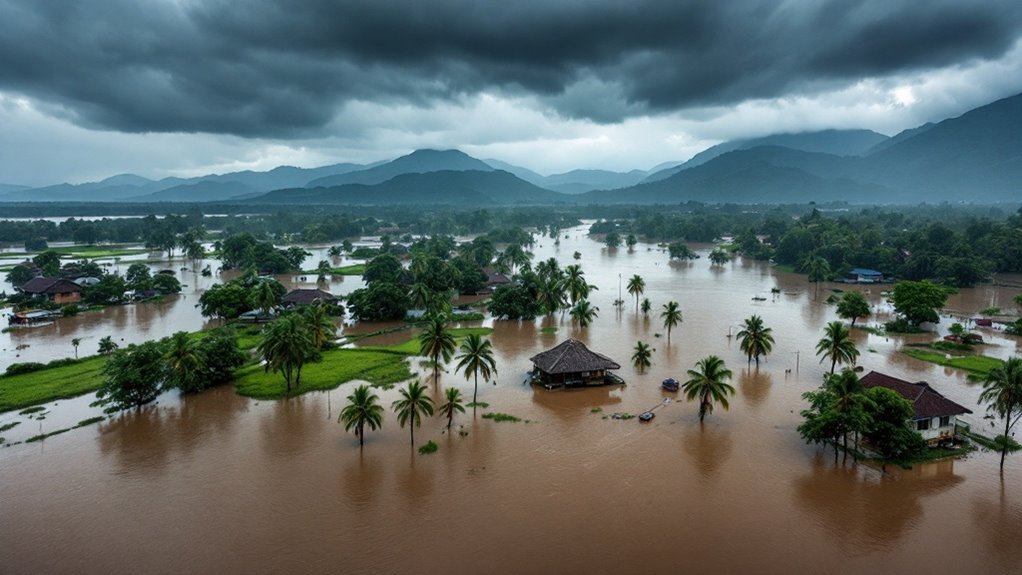

Surat Thani’s key districts have experienced severe flooding as relentless rainfall from the northeastern monsoon overwhelmed local waterways, particularly flooding areas near the Tapee River and affecting more than 300 households. Emergency evacuations, ferry suspensions, and economic disruptions have resulted, with ongoing adverse weather causing further risk. Authorities have deployed relief teams and issued warnings, while infrastructure and agricultural activities face significant setbacks. Further details will outline the evolving response strategies, economic ramifications, and the communities most affected by the crisis.
Although southern Thailand frequently experiences seasonal weather events, the recent flood crisis in Surat Thani has been particularly severe, affecting multiple districts across the province and neighboring regions, including Nakhon Si Thammarat and Narathiwat. The primary cause of this flooding is the northeastern monsoon, which has brought persistent and heavy rainfall to southern areas. Thundershowers, forecasted across the country, have resulted in isolated but intense downpours, especially in flood-prone districts of Surat Thani, where geography and proximity to major waterways increase vulnerability.
Surat Thani faces severe flooding as the northeastern monsoon brings relentless rain, impacting multiple districts and neighboring provinces in southern Thailand.
The impact of the monsoon extends to both the South Sea and Andaman Sea, contributing to turbulent weather and exacerbating local flooding. Residents are advised to remain vigilant for heavy rainfall and potential flash floods, as the ongoing weather pattern can quickly change conditions on the ground. One critical factor in Surat Thani’s crisis has been the overflow of the Tapee River, which inundated local roads and residential areas. Coastal districts have been especially hard-hit, with water levels rising quickly, demanding swift emergency responses. As of the latest reports, 302 households across the three affected provinces have been directly impacted, prompting mass evacuations and the mobilization of emergency personnel. The ASEAN Disaster Information Network (ADINet) has played a role in compiling and verifying data on the scale and impact of the floods, helping to inform regional disaster response.
Emergency measures have focused on both immediate and preventive actions. Authorities deployed teams to discharge excess water, distribute relief supplies, and support evacuations. Public safety has been a central concern, with SMS alerts and other warnings issued to inform residents of developing risks and recommended actions. Ferry services connecting Surat Thani to major islands have been suspended, reflecting both the severity of flooding and the need for caution in transport.
Economic and social disruptions are significant. Local businesses have faced closures due to inaccessible roads and submerged premises, while agricultural activities have been interrupted, raising concerns about longer-term economic impacts. The damage to infrastructure, including homes and roads, underscores the scale of the crisis and the challenges facing recovery efforts.
Ongoing assessments by the Department of Disaster Prevention and Mitigation aim to coordinate relief and facilitate the efficient allocation of resources. These efforts, combined with community resilience and government intervention, are central to Surat Thani’s strategy for overcoming the immediate crisis and restoring normalcy in the aftermath of relentless rainfall.