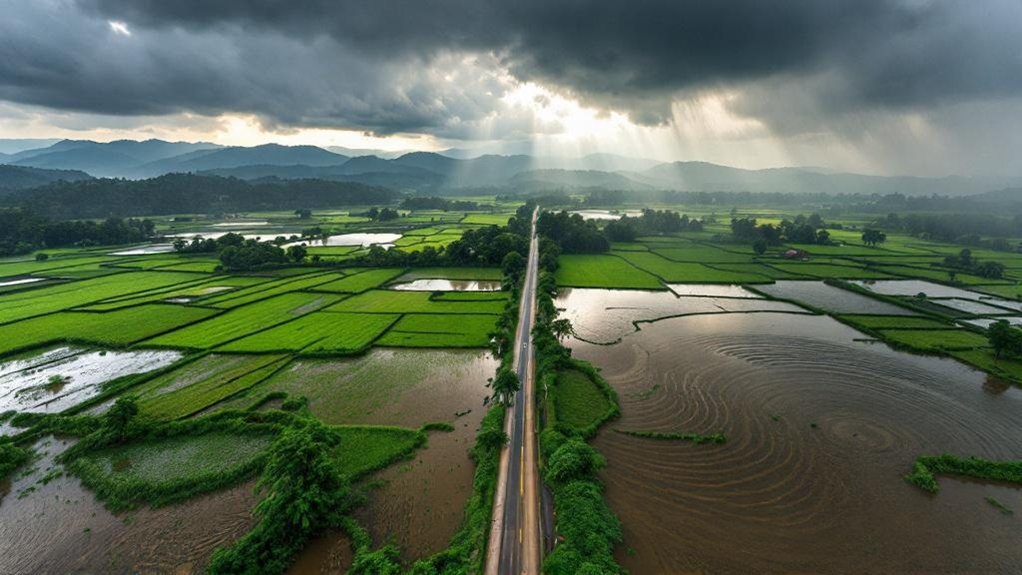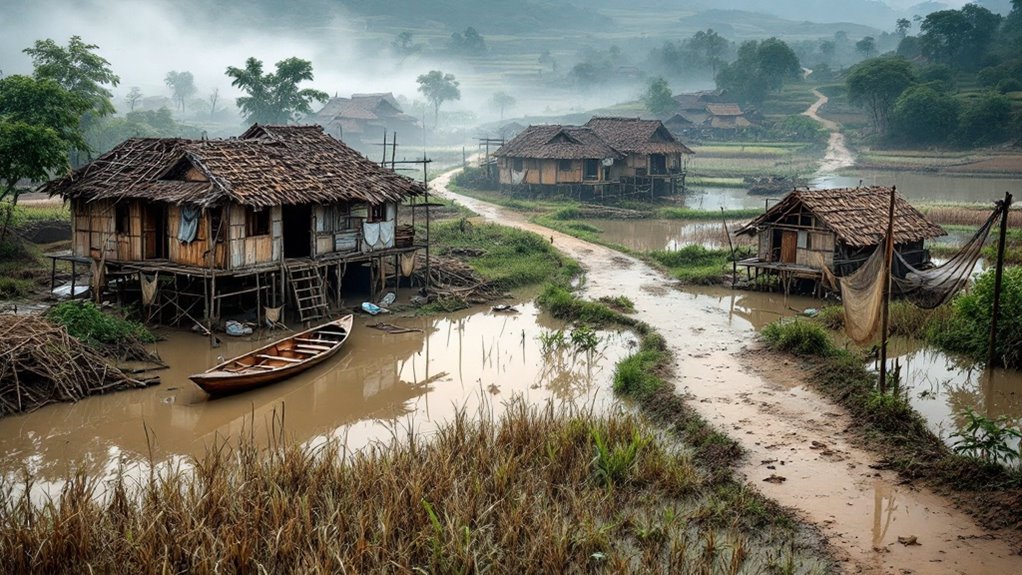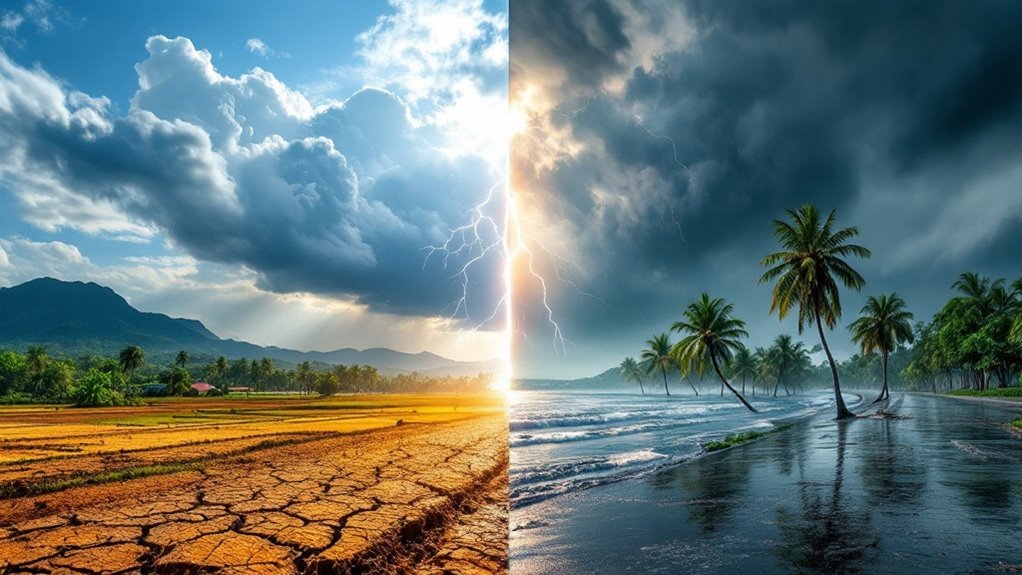

Thailand currently faces severe weather contrasts: much of the country endures blistering heat, with temperatures in northern and central provinces often exceeding 38°C, while the southern regions are hit by persistent torrential rains resulting in flash floods and widespread disruption. Meteorological predictions suggest the ongoing heat may coincide with increased rainfall due to a weak La Niña, intensifying both drought and flood risks. The consequences for agriculture, infrastructure, and daily life are significant; further details clarify regional impacts and safety measures.
Although Thailand is known for its tropical climate, its weather conditions are shaped by distinct seasonal patterns and regional variations. Throughout the year, average temperatures usually range from 22°C to 32°C (72°F to 90°F), yet these numbers can fluctuate considerably depending on the time of year and the region. The nation experiences three primary seasons: a hot season, a rainy season, and a cool season, each with its own defining characteristics.
From March to May, Thailand enters its hot season, with average temperatures climbing between 32°C and 38°C (89.6°F and 100.4°F). Some provinces, particularly in the north such as Chiang Mai and Tak, may see heat waves pushing temperatures above 42°C. Humidity levels are generally lower during this period, though brief but intense summer thunderstorms can occur. This extreme heat often necessitates public health advisories and can strain water resources in drought-prone areas. The hottest month is typically April, with Nakhon Sawan often recording the highest temperatures in the country. In this season, flowers bloom and vibrant colors emerge across the countryside, making it a visually stunning yet sweltering time of year.
Thailand’s hot season from March to May brings soaring temperatures, occasional heat waves, and brief but intense summer storms.
The onset of the rainy season from June through October marks a dramatic shift, as monsoon winds bring heavy rainfall that accounts for roughly 85% of the annual precipitation. Southern Thailand, including provinces along the Malay Peninsula and islands like Phuket, can experience particularly intense downpours and flash floods. The eastern coastal regions may also see variable rainfall due to coastal influences. Travelers camping in these southern regions during this season should select elevated campsites to minimize flooding risks while maintaining a safe distance from waterways. The rainy season is essential for maintaining agricultural cycles, yet it also carries risks of flooding and landslides.
From November to February, the cool season brings milder conditions, with temperatures typically between 19°C and 26°C (66.2°F and 78.8°F). This period is popular among tourists, especially in the north where cooler air prevails. Lightweight clothing is generally suitable during the day, though warmer layers may be necessary at night, particularly in upland areas.
Weather patterns in Thailand are closely monitored due to their impact on daily life and economic activities. For 2025, meteorological predictions suggest a weak La Niña phenomenon, which could lead to slightly lower temperatures and a 10–20% increase in rainfall, emphasizing the need for continued vigilance regarding both heat and flood risks across the country.