Ultralight backpacking means you keep your base pack weight under 10 pounds, carrying only essential gear while prioritizing safety, comfort, and efficiency. You’ll use a frameless backpack, minimalist shelter, and multipurpose, quick-drying clothing layers to cut bulk. Food choices focus on dehydration and careful planning, and water purification methods are lightweight. This approach lets you hike longer distances with less fatigue and reduces your environmental impact on trails; if you want more details on gear or strategies, keep going.
Ultralight backpacking is a specialized approach to wilderness travel that focuses on minimizing the weight of your gear without compromising essential safety or comfort. When you adopt ultralight principles, you aim for a base weight—that is, the total weight of your pack minus consumables like food, water, and fuel—under 4.5 kilograms (10 pounds). This means you select the lightest possible gear and carry only what you truly need. Rather than following a rigid weight limit, ultralight backpacking is about efficiently evaluating every item’s necessity and utility, prioritizing safety and comfort above nonessential extras. Compared to conventional backpackers—many of whom carry loads of 35 pounds or more—ultralight backpackers benefit from reduced physical strain, allowing for longer and more enjoyable days on the trail.
Ultralight backpacking means carrying only what you truly need, minimizing weight while maintaining essential safety and comfort in the wilderness.
You’ll find that ultralight backpacking stands in contrast to traditional backpacking, where base weights often exceed 15 to 30 pounds (6.8 to 13.6 kg), with some hikers carrying up to 55 pounds (25 kg). While traditional backpackers prioritize comfort by including more gear, ultralight backpackers strip their kit down to the essentials, minimizing comfort items and “just in case” gear. Some ultralight enthusiasts even target base weights under 9.9 pounds (4.5 kg), and those who follow a lightweight approach usually keep their packs at 20 pounds or less. The “Big Three” gear items—shelter, sleeping system, and backpack—are often the primary focus for weight reduction, with innovations in materials and design helping hikers minimize their burden without sacrificing necessary protection or sleep quality.
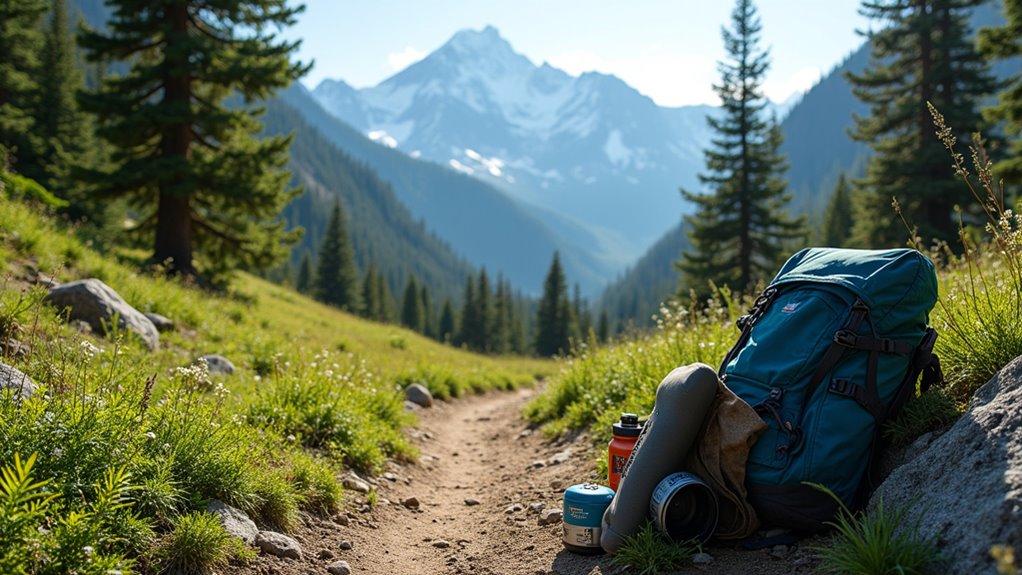
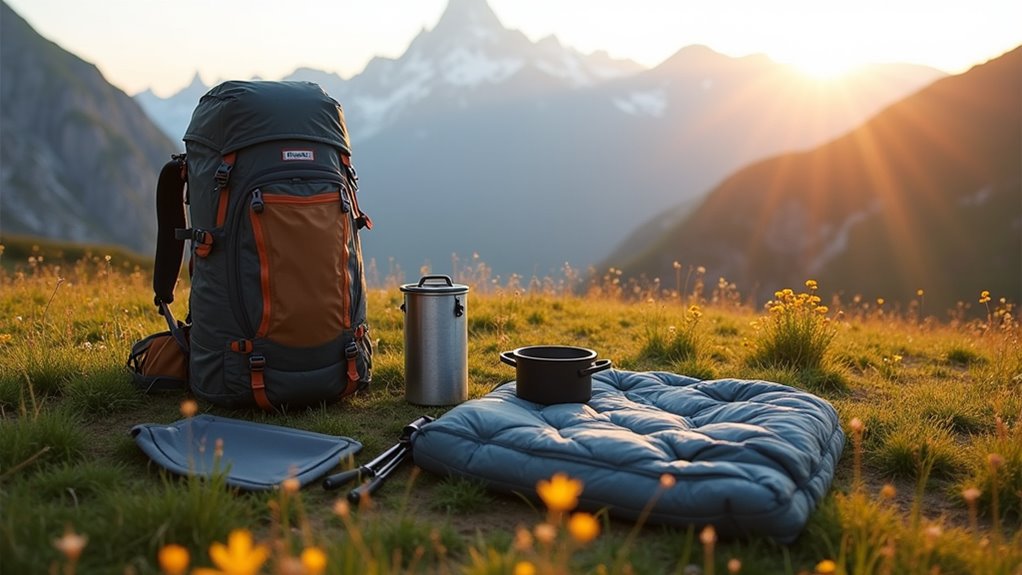
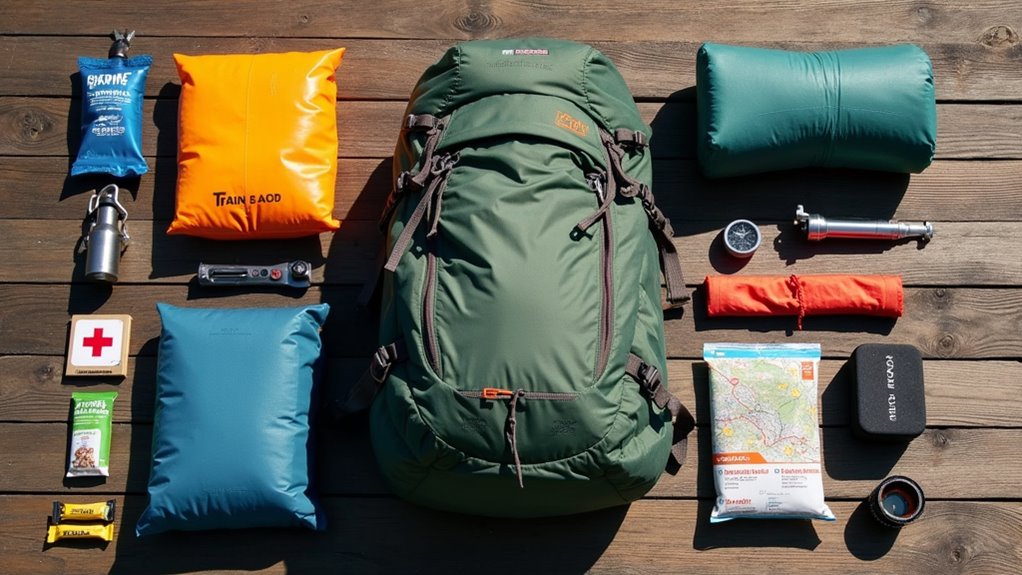
Critical to achieving an ultralight setup are the “Big Four” gear items: your backpack, shelter, sleeping bag or quilt, and sleep pad. Ultralight backpacks are often frameless and weigh around 1.5 to 2 pounds. Shelters range from minimalist tarps and bivy sacks to lightweight tents, typically between 1 and 2 pounds. Down quilts frequently replace traditional sleeping bags, and foam or inflatable pads are preferred for their reduced weight.
Clothing strategies play a key role, too. You’ll rely on layering, multi-purpose garments, and quick-drying fabrics. You carry fewer clothing items, planning for laundry or rapid drying if needed.
Food and hydration require similar scrutiny; you’ll pack dehydrated foods, use lightweight water purification, and plan carefully to reduce unnecessary weight.
Safety remains paramount. You’ll adapt the ten essentials to an ultralight context, carry minimalist first aid kits, and select lightweight navigation and signaling tools. By reducing your pack weight, you lessen both your physical impact on trails and your environmental footprint.