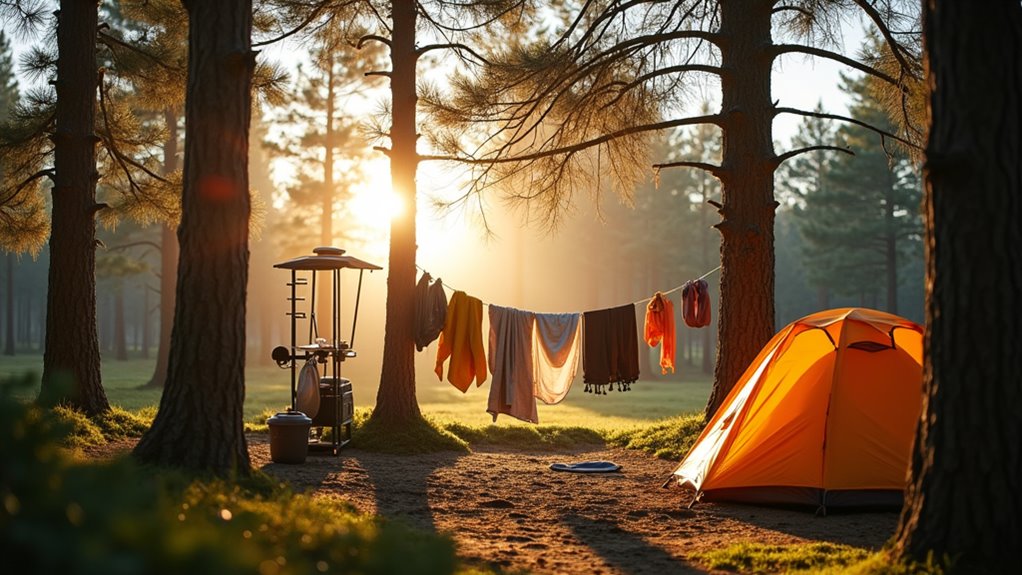

To stay clean while camping in the great outdoors, pack enough clean clothing and hygiene supplies, including biodegradable soap, wipes, and a portable hand wash station or solar shower. Change underwear and socks daily, use hand sanitizer regularly, and brush and floss your teeth. Separate dirty clothes from clean ones and use campsite laundry facilities if available. Always store and prepare food carefully, wash your hands before meals, and dispose of waste properly to avoid contamination or attracting animals. More detailed strategies follow.
While camping offers a rewarding escape into nature, maintaining personal cleanliness in outdoor environments requires careful planning and consistent effort. Before heading out, make certain to pack enough clean clothing for each day, along with essential hygiene supplies like biodegradable soap, shampoo, toothpaste, and unscented deodorant. Store water safely for both drinking and bathing, using containers designed for outdoor use.
Bringing proper gear, such as a portable hand wash station or solar shower, helps guarantee you have access to basic hygiene facilities even in remote areas. Extra garbage bags are vital for waste management, allowing you to collect and dispose of trash responsibly, minimizing your environmental impact.
Establishing a daily personal hygiene routine is important. Begin each day with fresh underwear and socks to reduce the risk of skin irritation or infection. If water is limited, using body wipes or baby wipes can be an effective way to stay clean without running water. If water is limited, use hand sanitizer frequently, especially before meals or after using the restroom. Scrupulously use biodegradable soap and shampoo for body and hair cleaning, always following environmental guidelines for wastewater disposal. Campers must take responsibility for campsite cleanliness to help maintain a healthy and enjoyable environment for everyone.
Maintain oral hygiene by brushing and flossing your teeth regularly, as neglect can quickly lead to discomfort or illness.
At your campsite, keep communal spaces clean by regularly disinfecting restrooms and maintaining scheduled cleaning of shared facilities. Provide handwash stations with soap and water, and encourage everyone to leave these areas in good condition. Dispose of garbage only in designated receptacles to prevent contamination of your surroundings.
Manage clothing by separating dirty items from clean ones and storing each in sealed bags. If your campsite offers laundry facilities, use them as needed. Opt for synthetic fabrics during the day for moisture-wicking properties, and switch to natural fabrics at night for comfort.
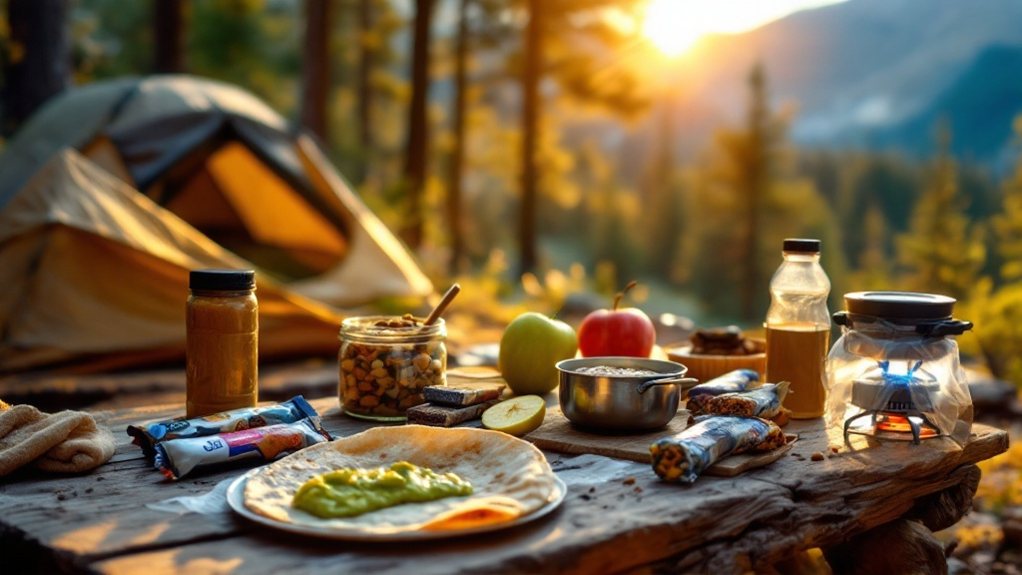
When preparing food, wash your hands thoroughly, protect food from insects and animals, and store all supplies in sealed containers. Use proper cooking techniques to avoid contamination and always have soap and water available for cleaning utensils and surfaces. Following Leave No Trace principles is essential when storing food to minimize wildlife encounters and protect the environment.
Finally, conserve water, use solar showers when possible, and dispose of all waste properly. Bring a first aid kit, sunscreen, and insect repellent to prevent illness and injury, guaranteeing a healthy and clean camping experience.