
To clean your hiking backpack for your next adventure, first empty all compartments and remove any detachable parts, like hip belts or frames. Shake out debris and vacuum hard-to-reach corners. Using lukewarm water and a pH-neutral soap, spot-clean stains with a soft washcloth, then wipe down interior linings. Rinse thoroughly, especially around zippers, and let the pack air dry upside-down in a shaded, ventilated spot. Regular cleaning after trips helps maintain performance—discover expert techniques and maintenance tips up ahead.
Although a hiking backpack is designed to withstand rugged environments, regular cleaning is vital to preserve its durability and performance. Before you start, empty every compartment, including hip belt pockets and hidden interior sections. Shake out the pack to remove loose dirt, sand, and food crumbs, guaranteeing nothing remains inside.
Always check the manufacturer’s tags for specific cleaning instructions based on your backpack’s materials. If possible, detach components such as shoulder straps, hip belts, or frames to make cleaning more efficient. For a thorough debris removal, use a vacuum to reach crevices and corners. Gunk accumulation can damage zippers and buckles, raising the risk of failure if not addressed during cleaning.
Start the cleaning process by dampening a soft washcloth with lukewarm water—never hot, as it can damage certain fabrics. Use a pH-neutral soap or a detergent-free cleaner sparingly to avoid leaving residues. Focus on spot-cleaning exterior stains using gentle, circular motions, and wipe down interior linings to remove crumbs and residue. A clean backpack is more pleasant for the user and those nearby, so taking time to address odor and grime helps create a better hiking experience for everyone.
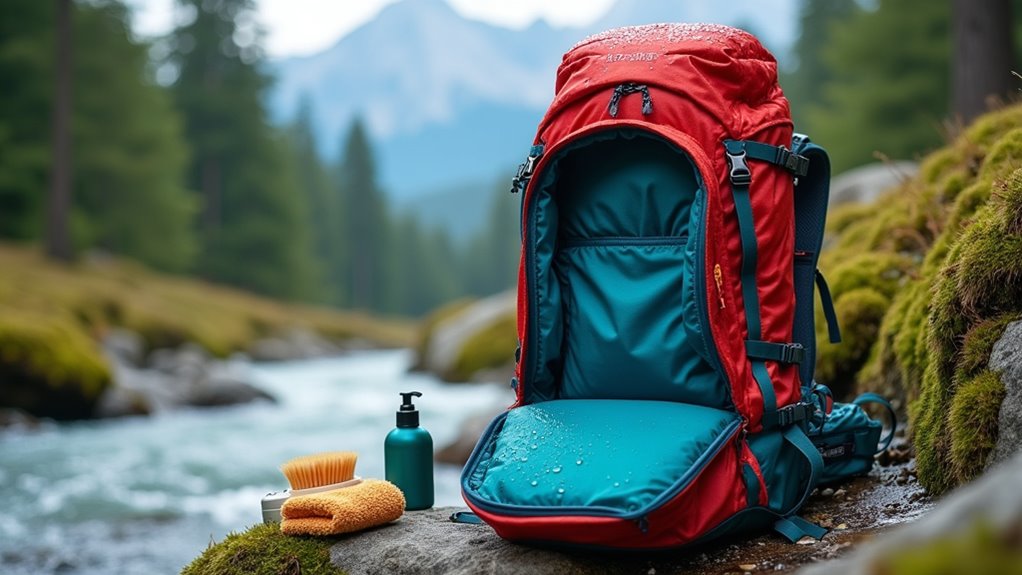
Rinse the pack well with cool water to guarantee you don’t leave any soap behind, as leftover cleaner can impact waterproof coatings. Pay special attention to zippers and hardware. Brush the zipper teeth with a soft nylon brush, such as an old toothbrush, to dislodge dirt and sand that could cause malfunction.
Dry zippers completely with a clean cloth, and, if zippers remain stubborn, applying beeswax can help. Avoid harsh scrubbing on plastic or composite hardware to prevent scratches.
For deep cleaning, fill a tub or sink with lukewarm water and mild detergent. Briefly submerge the backpack—only if the manufacturer allows—and agitate with a soft sponge, concentrating on high-contact areas. Use a stiff-bristle brush sparingly for ground-in grime, and rinse until the water runs clear.
Don’t neglect sweat-prone areas like back-panel foam padding, shoulder straps, and hip belts. Clean hydration tube ports if present, and wipe down compression straps, buckles, and load-lifter straps.
Dry the backpack upside-down in a shaded, well-ventilated area, with all compartments open. Avoid direct sunlight and heat sources. After drying, reinspect seams, reapply DWR coating if needed, and store flat in a cool, dry place. Schedule cleanings after multi-day trips for ideal longevity.