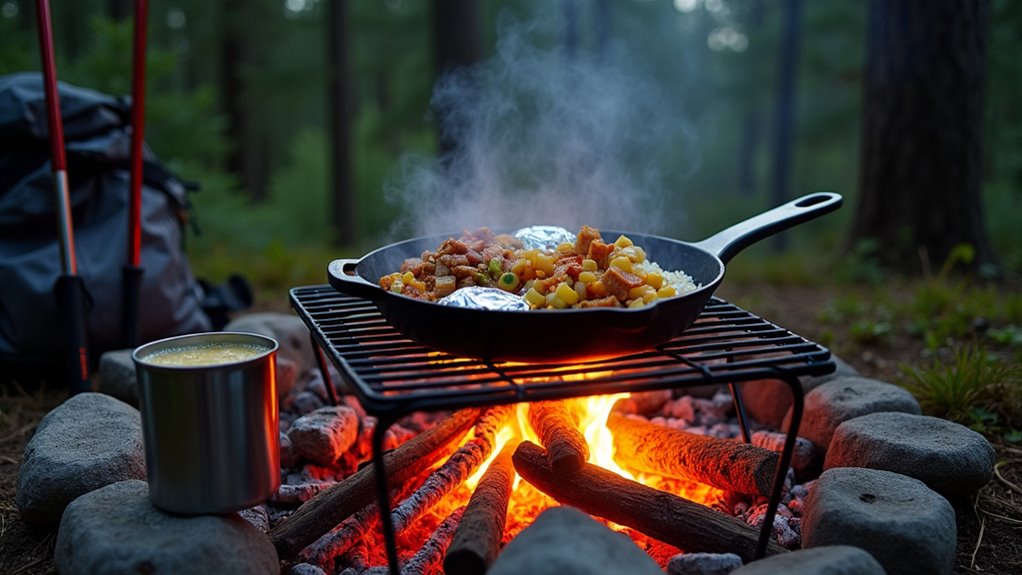
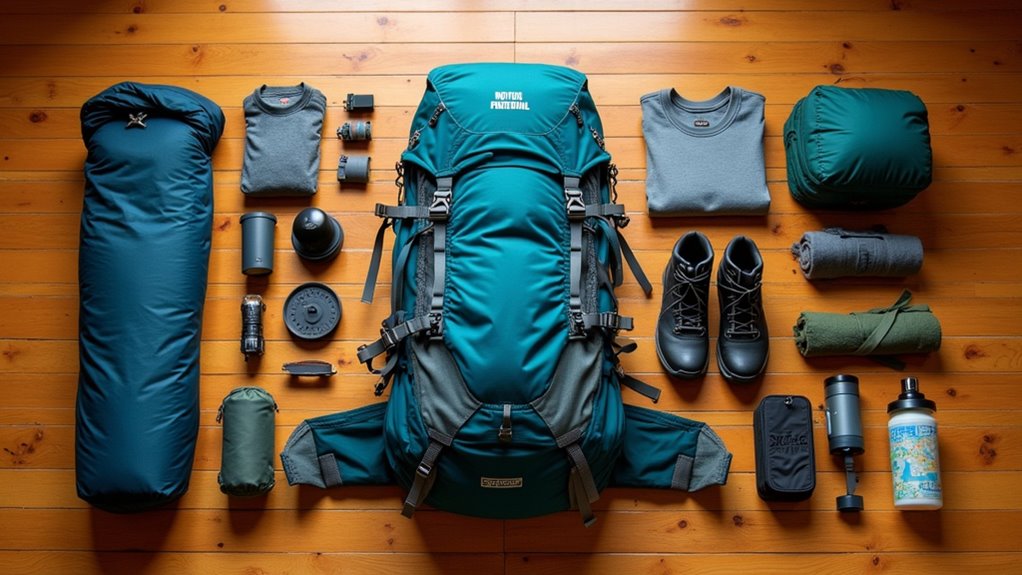
When you’re backpacking, cook calorie-dense foods like dried meats or instant soups over a portable grill, tripod, or rock stove for efficiency and minimal pack weight. Use skewers for sausages, or wrap vegetables or proteins in foil to roast directly in coals. Prepare fresh fruit or trail mix for quick, no-cook snacks. Always plan meals for energy needs, purify water before use, and properly dispose of waste to protect the environment. Further guidance will equip you for various culinary situations outdoors.
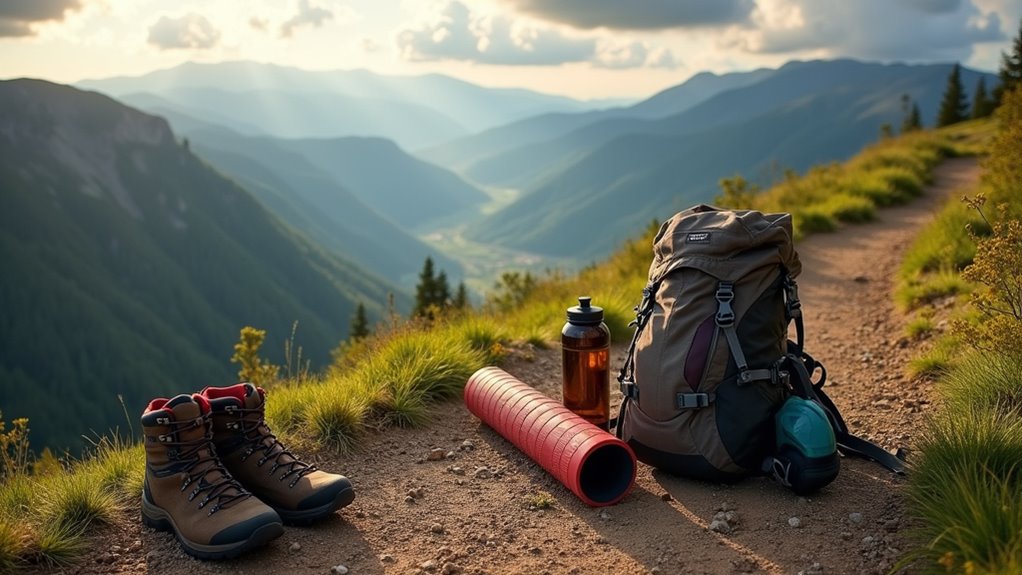
Whether you’re venturing deep into the backcountry or setting up camp near a trailhead, mastering campfire cooking is essential for backpackers who want to prepare hot, nourishing meals on the trail. You’ll need to select gear that supports both your meal preferences and the realities of outdoor cooking. Portable grill grates fit easily into most packs and let you cook over open flames. Cooking tripods are useful for suspending pots above the fire, giving you precise control over heat.
If you don’t carry extra gear, you can improvise a rock stove by arranging stones to hold a pot over campfire coals. For quick snacks, skewering food on sticks allows you to cook items like sausages or marshmallows directly over the flames. Planning ahead for cooking needs is important to ensure you have the right tools and ingredients for your meals. A small ultralight grill is a compact and practical addition to your kit, offering versatility for grilling or supporting cookware over your campfire.
When it comes to what you’ll actually cook, go for foods that are lightweight, calorie-dense, and easy to prepare. Dried meats such as jerky are ideal because they’re lightweight and require minimal preparation. Canned goods, though heavier, are durable and can be heated directly over the fire. Fresh fruits are convenient, as they require no cooking, while instant soups only need boiling water, saving both time and fuel. Nutritional planning is crucial for maintaining energy during long hikes and outdoor activities.
Trail mix serves as a reliable, non-cook snack to keep your energy up.
Use safe and efficient cooking techniques to maximize your resources. Rotisserie cooking with a skewer guarantees even heat, while foil packets let you steam or roast food in the coals. Grilling on a grate or rock surface suits many types of protein and vegetables, and stir-frying in a broad-bottomed pot quickly cooks small pieces of food over high heat.
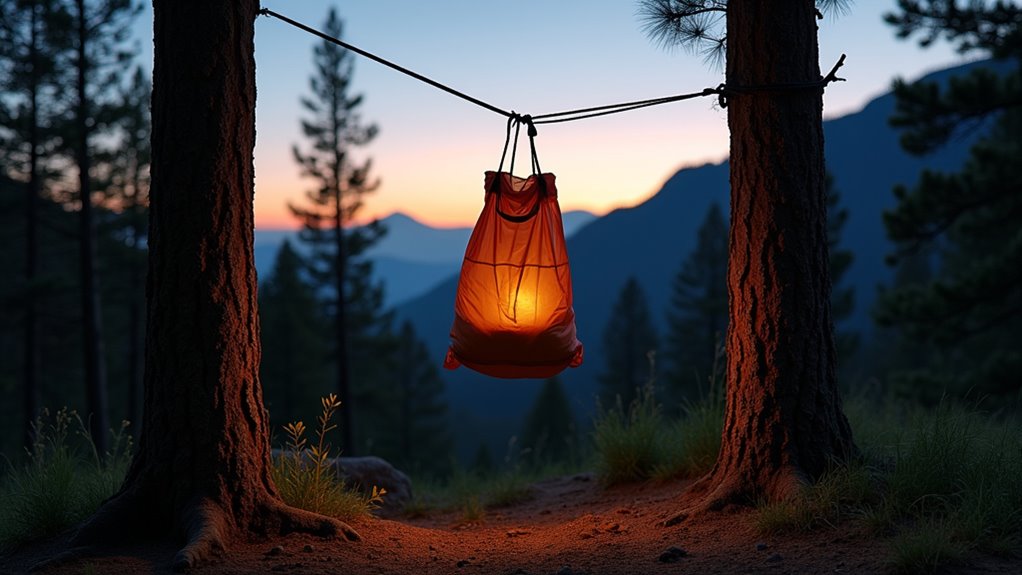
Always prioritize safety and efficiency. Fully extinguish your fire before leaving it, store food to avoid wildlife encounters, and purify water by boiling or filtering. Use lightweight, durable cookware and utensils, and shield your fire or stove from wind to conserve fuel.
Plan meals in advance, choosing dehydrated or high-calorie options to reduce weight, and properly dispose of all food waste to minimize environmental impact.