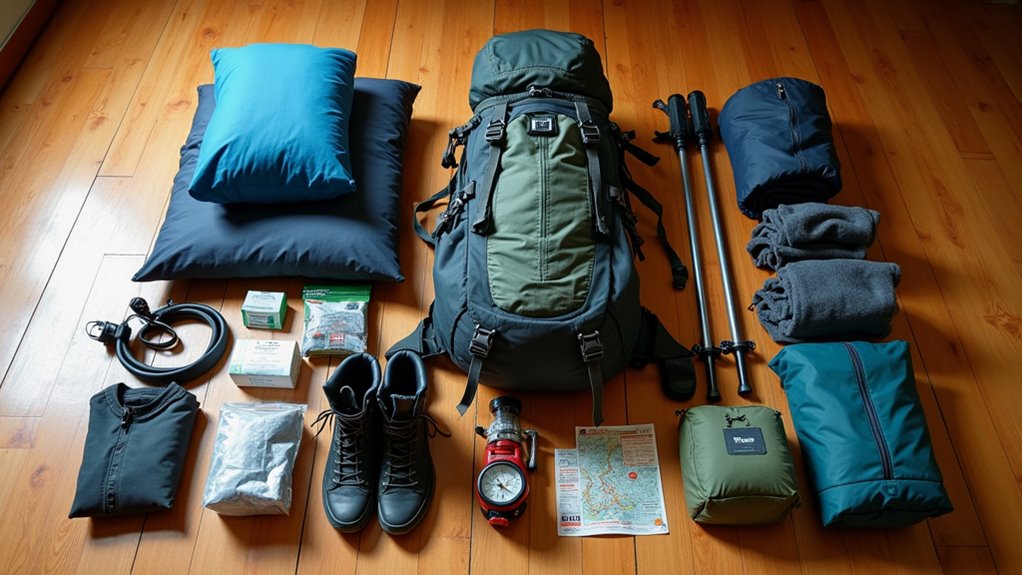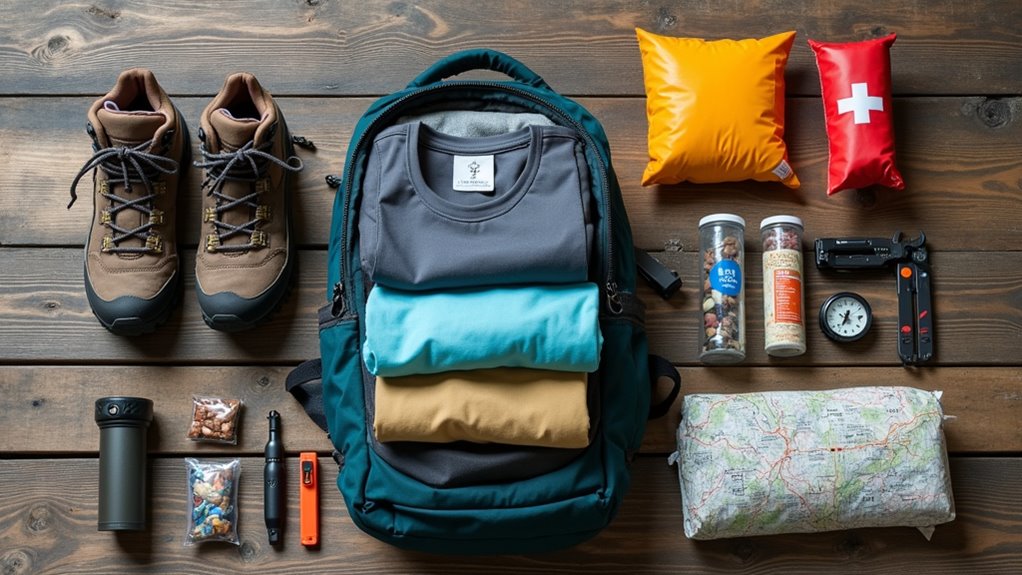
When packing for a hike, make sure to bring a comfortable backpack, weather-appropriate clothing, and durable hiking footwear. You’ll need enough food and water, with a reliable method for purification, plus a map, compass, and backup GPS or phone. Include a first-aid kit, emergency shelter, headlamp, firestarter, and whistle for safety. Don’t forget sunscreen, insect repellent, hand sanitizer, and required permits. With these essentials, you’ll be equipped for most conditions—specific guidance on each item follows.
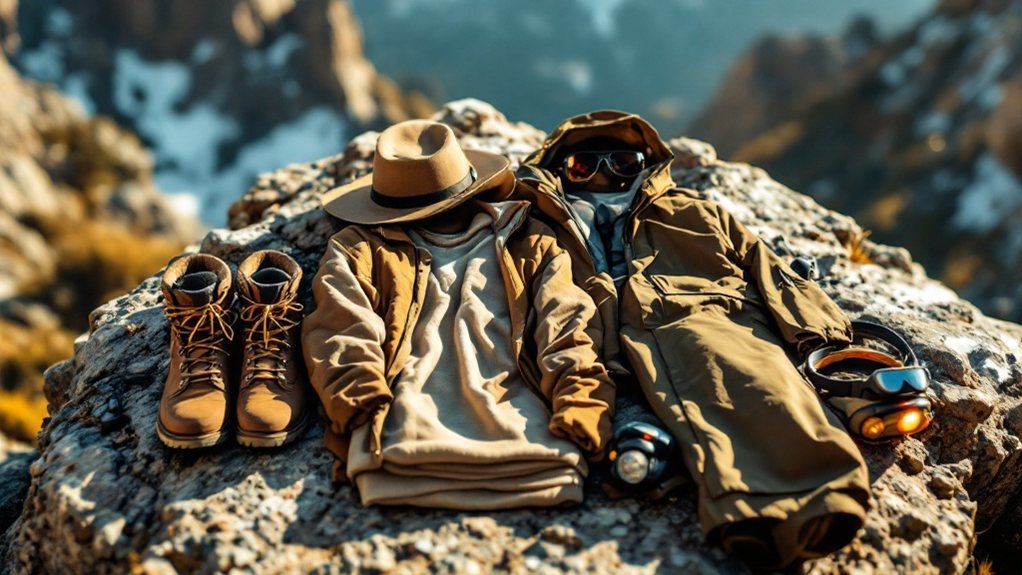
Whether you’re setting out for a day hike or preparing for a multi-day trek, packing the right gear is crucial to confirm both safety and comfort on the trail. Start with a hiking pack designed for both comfort and adequate carrying capacity. Select weather-appropriate clothing, emphasizing moisture-wicking base layers, insulating mid-layers, and a waterproof outer shell. Durable hiking footwear—whether boots or trail runners—helps protect your feet and provide necessary support on varied terrain.
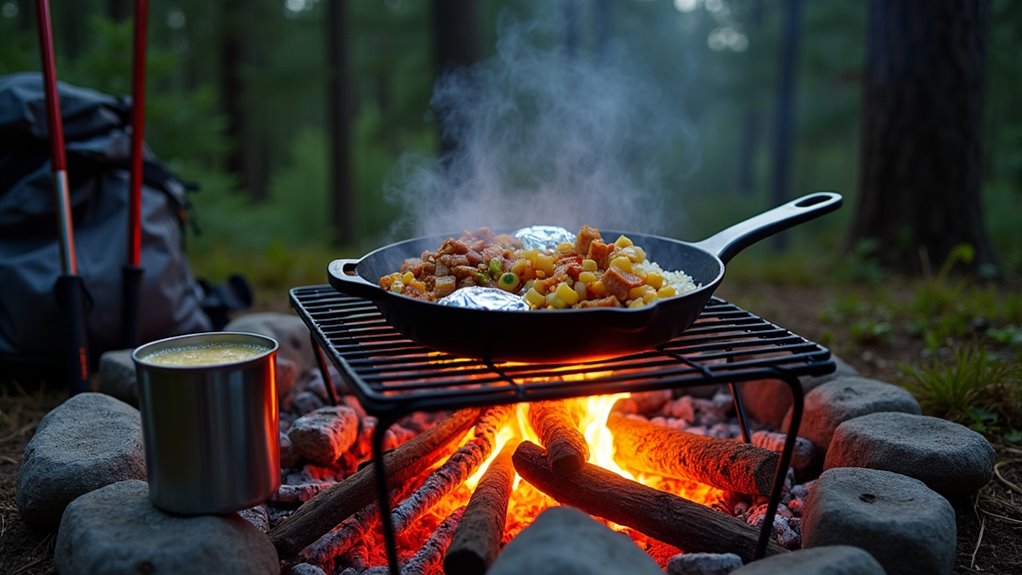
Energy and hydration are essential. Carry sufficient food, such as energy bars, trail mix, or packable meals, based on your hike’s duration. Bring a hydration system, like a bladder or multiple water bottles, and always carry a reliable water purification method, such as a filter or chemical tablets, especially for longer or remote hikes. Consider electrolyte supplements to maintain proper hydration and energy balance during strenuous activity. Staying well fed and hydrated not only fuels your body on the trail but also plays a key role in preventing minor issues from developing into serious problems.
Stay fueled and hydrated by packing energizing snacks, ample water, a purification method, and electrolytes—essentials for any safe and successful hike.
Navigation tools prevent you from getting lost. Always carry a physical map of the hiking area and a compass for reliable directional assistance. A GPS device or a smartphone loaded with mapping apps can help, but don’t rely solely on electronics; include backup navigation aids like written directions or knowledge of key landmarks. If you’re venturing into remote areas, a satellite messenger provides a way to communicate in emergencies. A well-prepared hiking checklist helps ensure you don’t forget essential items and can tailor your gear for the specific trail conditions. Developing basic navigation skills before your hike will significantly increase your confidence and safety on unfamiliar trails.
Preparedness for emergencies is non-negotiable. Pack a thorough first-aid kit and an emergency shelter, such as a bivy sack or lightweight tent. Firestarter materials—waterproof matches or lighters—are crucial for warmth or signaling. A headlamp or flashlight with extra batteries ensures visibility in low-light conditions. An emergency whistle can be used to signal for help if needed.
Don’t neglect tools and repair items. Include a multi-tool or Swiss Army knife, a basic repair kit with duct tape and paracord, and trekking poles for stability. Waterproof stuff sacks or pack liners keep gear dry, and a lightweight chair or sit pad adds comfort during breaks.
For hygiene and health, pack sunscreen, insect repellent, hand sanitizer, and a bathroom kit. Finally, carry personal identification, cash, and any required permits or passes.