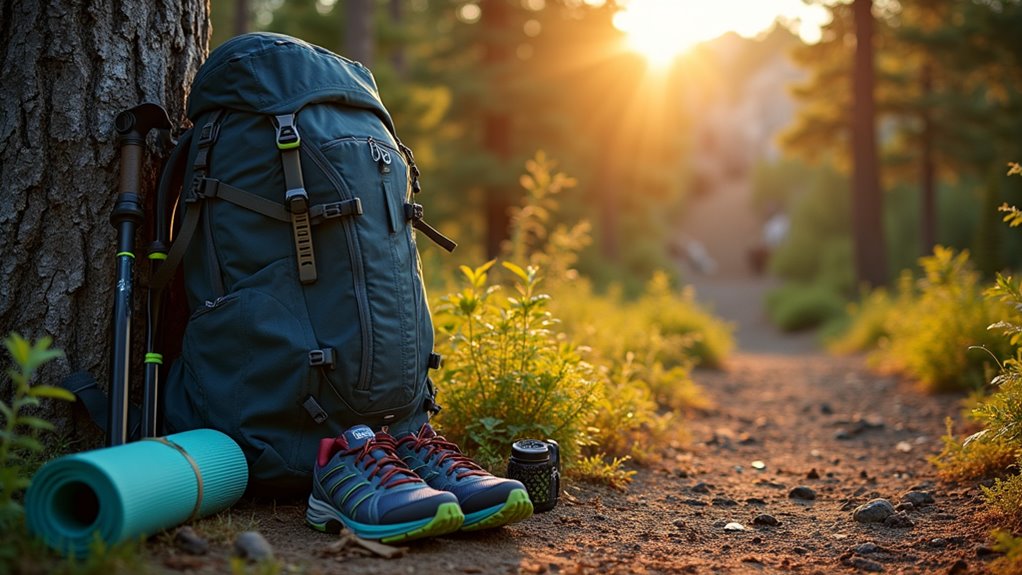

To train for backpacking, focus on building cardiovascular endurance with brisk walks and stair climbs 3–4 times a week, then add weighted hikes to prepare for carrying gear. Strengthen your lower body and core using jump squats, lunges, and planks, and practice balance drills like single-leg stands. Wear your hiking boots and gradually increase pack weight and session duration. Training on varied trails that match your trip’s terrain further enhances readiness. The next steps will cover advanced preparation strategies.
Whether you’re planning a challenging multi-day trek or a weekend excursion, effective backpacking requires more than just enthusiasm and the right gear. To prepare your body for the demands of the trail, you need to build endurance, strength, core stability, and balance through a structured training program that mimics real backpacking conditions.
Effective backpacking goes beyond gear—train your body for endurance, strength, and balance to meet the trail’s real demands.
Begin by developing cardiovascular endurance with brisk walking three to four times weekly, gradually increasing both distance and pace. Incorporate stair climbing into your routine to strengthen your legs and simulate elevation gain, which is common on most backpacking trails. As your fitness improves, progress to weighted hikes using a loaded backpack to replicate trail conditions, and mix in cycling or swimming for low-impact cross-training. Proper nutrition before, during, and after training sessions will fuel your workouts and support muscle recovery. Start with 30- to 60-minute sessions and, over several weeks, build up to multi-hour workouts to match the duration of your planned trips. Before heading out, practice setting up your tent and familiarizing yourself with your gear so that you can efficiently handle camp tasks after a tiring hike.
To strengthen your lower body, perform jump squats for explosive power, step-ups to mimic uneven terrain, calf raises for ankle stability, and lunges with a weighted pack to improve balance under load. Focus on bodyweight exercises like sumo squats, performing them three to four times weekly to avoid overtraining and reduce injury risk.
Core stability is essential for carrying a loaded pack over varied terrain. Prioritize planks, holding for 30 to 60 seconds, and add Russian twists and dead bug exercises to build rotational strength and deep core stability. Avoid sit-ups, as they can risk back injury and offer less functional strength for backpacking.
Improve your balance and coordination by practicing single-leg stands on unstable surfaces, tandem walking heel-to-toe, and using hiking poles to develop rhythm and proper weight distribution. Walk backward uphill and navigate loose terrain like gravel to engage stabilizing muscles and adapt to unpredictable conditions.
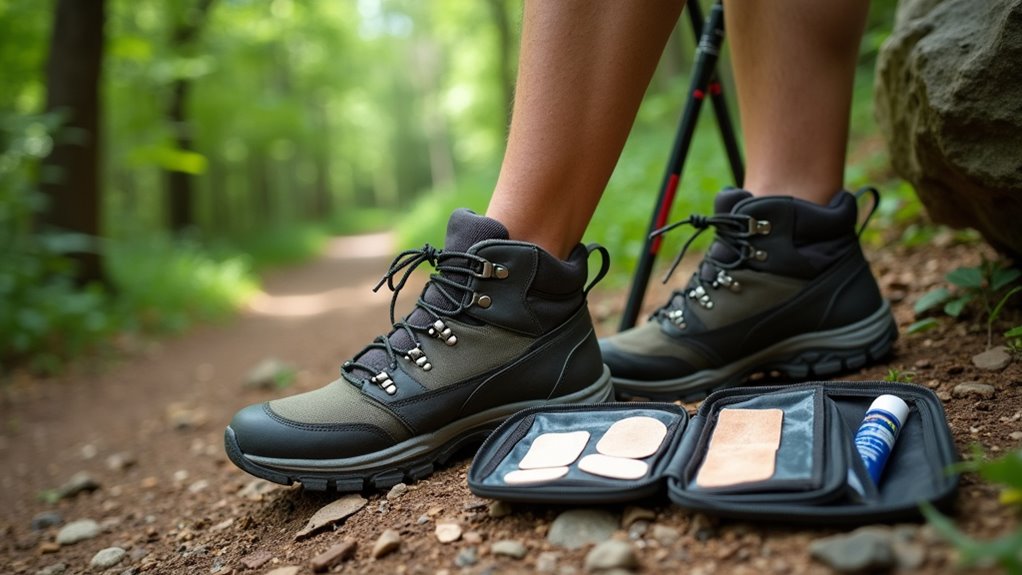
Always train on local trails with similar elevation and surface types to your planned route, wearing your hiking boots and simulating pack weight with sandbags or water bottles. Gradually increase pack weight and session duration by 5-10% weekly, alternating heavy and light training days for muscle recovery.
Practicing campsite tasks while fatigued further prepares you for real-world backpacking demands.