Backpacker travelers camping in remote areas often select easy breakfast options such as energy bars, instant oatmeal, meal-replacement shakes, and tortilla-based avocado “toast” for their portability and minimal preparation requirements. Items like bagels, pita bread, and pre-made peanut butter energy bites provide durable, high-energy choices, while powdered milk allows for quick cereal or yogurt combinations. These breakfasts are compact and require little to no cooking, supporting efficient routines in the outdoors. Further details offer extra strategies for efficient meal planning.
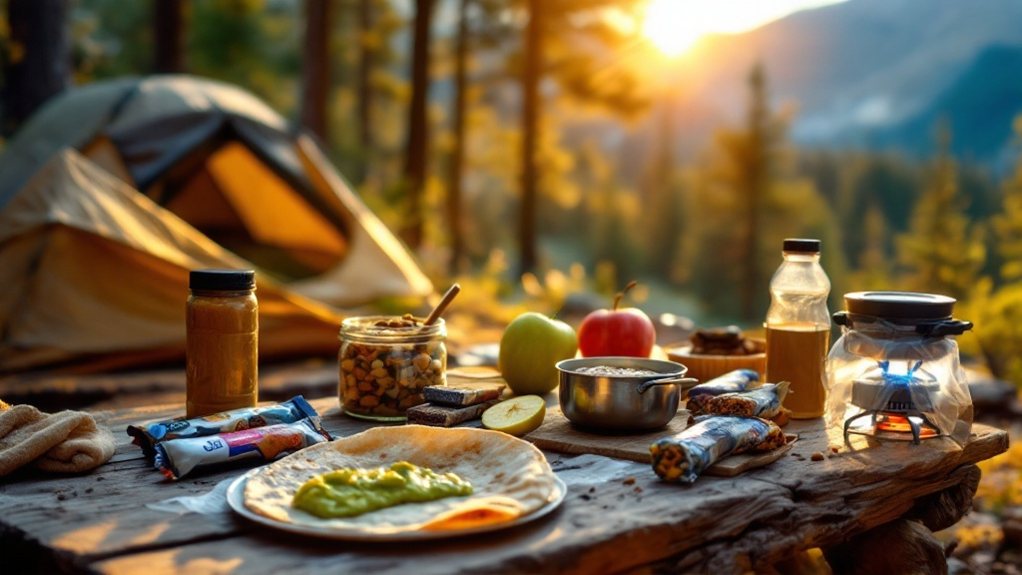
When planning meals for a camping trip, choosing easy breakfast options is vital for maximizing time outdoors while ensuring balanced nutrition. For backpacker travelers, efficiency, portability, and minimal preparation are key requirements. No-cook breakfast ideas, such as avocado “toast” on tortillas or bread, provide a quick, cold meal with healthy fats. Durable bread options like bagels, English muffins, and pita bread are especially popular among campers because they hold up well in a backpack and can be warmed easily over a camp stove or fire.
Cereal paired with powdered milk is another simple choice, needing only water for rehydration. Smoothies and meal-replacement shakes can be made using powdered ingredients and water, offering convenience and important nutrients without the need for refrigeration or cooking equipment. Chia seed pudding is another nutritious breakfast that can be prepared ahead of time by soaking chia seeds in milk or a milk alternative overnight.
Packaged breakfast foods, including energy bars, granola bars, and protein bars, are designed for portability and require no preparation, making them ideal for on-the-go consumption. Peanut butter energy bites, which are no-bake snacks made from oats and peanut butter, can be prepared ahead of time and transported easily.
Packaged bars and peanut butter energy bites are perfect grab-and-go breakfasts, offering quick nutrition with zero prep for busy mornings on the trail.
Homemade trail mix, consisting of nuts, seeds, and dried fruits, provides sustained energy and can be customized to personal preferences. Instant breakfast meals like oatmeal, noodles, freeze-dried eggs, cream of wheat, and grits require only hot water, which is typically accessible at campsites equipped with stoves or campfires. Taking advantage of hostel kitchens when traveling between camping destinations can allow you to prepare more elaborate breakfast options and restock supplies.
These options deliver warmth and comfort, especially in cooler climates or early mornings. For variety, dried mango, honey, cocoa powder, coconut flakes, and fresh fruits can be added to oatmeal or parfaits to increase flavor and nutritional value. Nuts and seeds also contribute crunch and important nutrients.
Yogurt and granola combinations are popular among campers seeking a balanced breakfast. Greek yogurt is high in protein and pairs well with granola and dried fruits. Freeze-dried yogurt rehydrates efficiently, and powdered milk alternatives such as coconut, oat, or soy milk are available for those with dietary restrictions.
Portable breakfast foods like bagels with cream cheese and salmon, pre-made waffles with peanut butter, and chia pudding prepared in advance offer versatility and sustenance for backpackers with limited storage and preparation capacity. These options collectively support the needs of travelers who prioritize time, nutrition, and simplicity in the backcountry.