If you’re new to backpacking, start with short overnight trips on familiar trails, aiming for less than 10 miles in total, and always check conditions and water availability with local ranger stations. Build up your fitness by mixing cardio and strength exercises focused on your legs and core. Use a small backpack, pack only essentials, and invest in durable, lightweight gear. Prioritize safety by practicing navigation, carrying a first aid kit, and following Leave No Trace guidelines. You’ll discover essential planning and preparation strategies next.
Although backpacking offers a unique opportunity to explore natural environments and test your self-reliance, first-time adventurers should approach their initial trips with careful planning and preparation. Begin by choosing short and manageable overnight trips, ideally on familiar trails with established amenities like campgrounds and reliable water sources. Opt for routes with round-trip distances of 10 miles or less to build confidence and reduce the risk of fatigue or injury. Before setting out, always research trail conditions, potential hazards, and verify the availability of water sources to guarantee you don’t encounter avoidable challenges. If you’re unsure about area-specific rules or have questions about trail and park information, local ranger stations are reliable resources for up-to-date guidance.
Enhancing your physical fitness is vital for a comfortable backpacking experience. Prioritize regular cardio activities—such as walking, running, or cycling—to build endurance, and supplement these with strength training focused on your legs and core. Flexibility exercises can help you improve mobility, making it easier to navigate uneven terrain. Gradually increase your activity level before your trip to avoid overexertion, and maintain a healthy lifestyle with balanced nutrition and sufficient rest. Developing navigation skills such as reading maps and using a compass is a crucial aspect of backpacking preparation, ensuring you can find your way even if technology fails. Consider creating a flexible itinerary that allows for unexpected changes while still keeping your journey organized and purposeful.
Build endurance with regular cardio, strengthen your legs and core, and boost flexibility for ease on uneven trails.
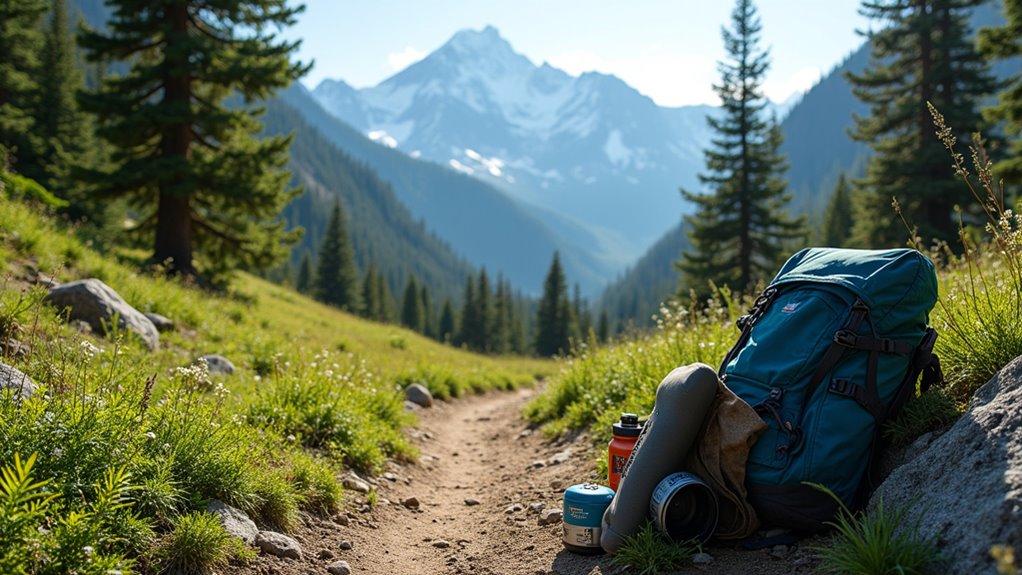
Selecting the appropriate gear makes a significant difference. Use a smaller backpack to limit overpacking and increase maneuverability. Pack only essential items to minimize weight, and invest in high-quality, durable equipment. Comfortable sleeping gear is essential for rest, and navigation tools like maps or GPS devices will help you stay oriented. Organize your gear strategically, starting with sleeping items, layering clothing for variable conditions, and maximizing the use of available space.
Safety should remain a top priority throughout your trip. Follow established backpacking safety guidelines, and consider travel insurance for additional protection. Adhere to Leave No Trace principles to minimize your environmental impact. Develop a clear emergency plan and communicate your itinerary to someone before departure, especially if you’re backpacking alone. Carry a thorough first aid kit and take health precautions relevant to the area.
When selecting a trail, prioritize popular, well-marked, and regularly maintained routes with easy terrain and scenic value. If you’re traveling solo, choose locations with amenities and inform someone of your plans. By focusing on preparation, conditioning, careful packing, and safety, you’ll set a strong foundation for successful and enjoyable backpacking adventures.